

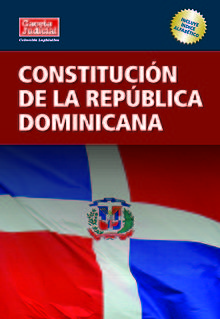
Talk about reforming the 2015 Constitution is being kept alive in the media in the weeks leading up to the 6 October primary. In the first half of the year, social, political and even international pressure impeded President Danilo Medina from pushing through constitutional reform to legally enable his running for a second reelection. The story did not end there.
Little by little, the Medina followers have been gathering support from leading persons and entities and are finding reasons why the National Constitutional Assembly should be convened and priority be given to constitutional reform.
The biggest argument for the “need” to modify the Constitution is to unify the municipal, congressional and presidential elections to save costs and complexity.
Other points that have been made are to eliminate the much-criticized Attorney General participation in the National Council of the Magistracy. The inclusion of the Attorney General dates back to the 2010 Constitution promoted by former President Leonel Fernández and has enabled the President to have the majority in deciding who’s who in the Justice Branch.
Other sectors say that the reform could be used to pass a change that would enable the President to win with less than 50%+1 of the vote. This would make it easier for a weaker candidate to win. Furthermore, Danilo Medina followers are keen on reform that would enable President Danilo Medina to run again for another eight years as of 2024.
The first to again bring up the constitutional reform issue were top members of the Social Christian Reformist Party (PRSC), then former President Hipólito Mejía. More recently Pedro Brache of the National Council of Business and even the Adriano Miguel Tejada, executive editor of Diario Libre, have added their voices in favor of constitutional reform. e
Vice President Margarita Cedeño said on Wednesday, 28 August that she is against the unification in time for the 2020 general election. Nevertheless, she said she was open to discussions for this in the future. “I don’t think we should be changing laws at will. What is important is that the laws be made and that they be made correctly,” she said. “Laws need to be respected,” she said, when speaking before the opening of a conference on telecommunications at the Centro Cultural de las Telecomunicaciones in Santo Domingo.
The elections will take place in seven months. “Only now is when they noticed the inconvenience?,” asks news commentator Huchi Lora. Lora says he among many others criticized the provisions now cited by those in favor of constitutional reform. “And now is when they notice all that was wrong?” asks Lora. “How can we make a Constitution to accommodate one person?” he asks. He expresses his sadness that businessmen would support this movement.
Altagracia Salazar on “Cuentas, no Cuentas” morning radio show said that in the past municipal election less than half of the people who vote in the presidential election participated. She says that past experiences do not support the separation of municipal, congressional and presidential elections. She said, the question now would be: “Are they preparing a crisis?”.
Rafael Toribio, also speaking on “Cuentas, No Cuentos,” said that the new automated system ensures that results will be available in 15 minutes. “It looks like technology will work in favor of the management of the elections,” he said. Toribio says Danilo Medina followers are intent on ensuring their leader gets eight more years in government as of 2024.
Toribio warned that any politician taking sides with the Danilistas will lose the favor of the middle class, expressed by the Marcha Verde anti-corruption movement.
Read more in Spanish:
Listin Diario
Diario Libre
Diario Libre
YouTube
YouTube
YouTube (min 45:20m) – Cuentas, no Cuentos
29 August 2019