

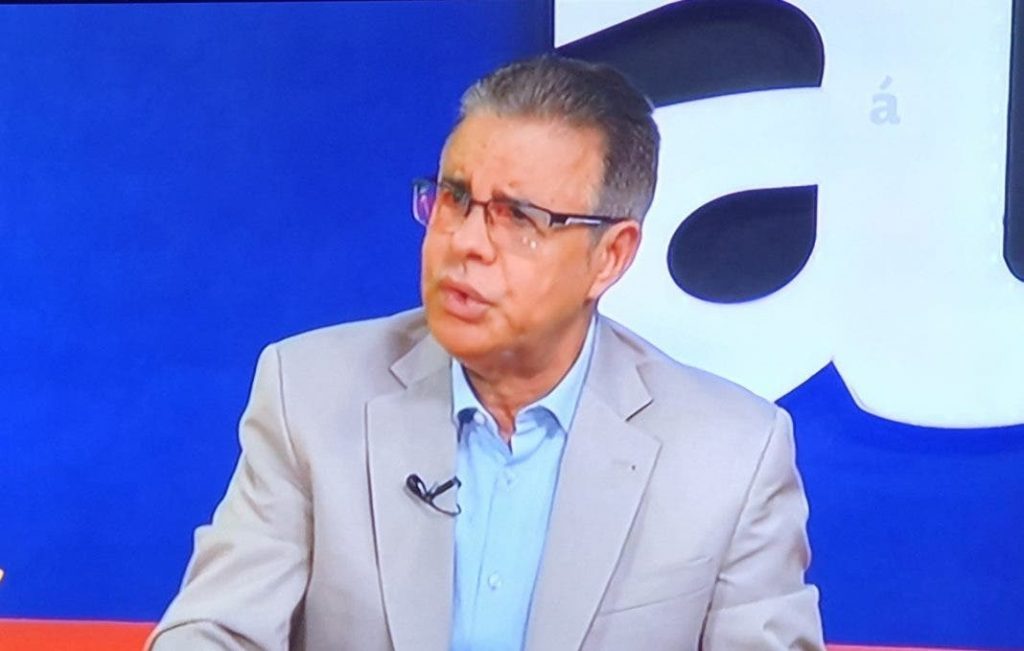
The president of the Ibero-American Forum of Tourism Journalists (FIPETUR), Luis José Chávez, today called on the Ministry of Public Health to explain why it has refused to validate the use of ivermectin as an effective drug to cure Covid-19 in its initial phase.
Chavez says he cannot find an explanation of why Dr. Rafael Sánchez Cárdenas has not taken a position and either approved or rejected the anti-parasite drug that has proven effective for the recovery of over 1,800 patients in at least three well known medical centers in the country.
Chávez understands the widespread use of the drug would contribute to the country’s recovery as a tourist destination, especially to medical tourism. He highlighted the leadership taken by Dr. Jose Natalio Redondo of Grupo Rescue (Clinica Dr. Bournigal in Puerto Plata, Clínica Dr. Canelo in La Romana and Punta Cana Medical Center in Punta Cana) in the early treatment of the disease nationwide.
“The Dominican Republic has been the first country in the world to show the clinical efficacy of ivermectin in patients affected by the coronavirus, “but for some reason difficult to understand, our health authorities have preferred to ignore that fact, while the drug has already been approved in Peru, Bolivia, El Salvador and seven municipalities in Colombia,” said the journalist.
He says clinical results show the drug is the best alternative for controlling the disease in its early phase, avoiding costly treatment in intensive care and significantly reducing fatalities. The drug is readily available at Dominican pharmacies. Each dose costs around RD$300. Most patients recover with two doses.
He offered his personal testimony: “I speak with this strength of conviction on the subject because I am a personal witness of the effectiveness of ivermectin through two close relatives affected by Covid-19, who presented the main symptoms of the virus and managed to recover before 48 hours, after being treated with ivermectin,” he explained.
He said the country has lost precious time in officially authorizing ivermectin in patients affected by the early stage of the virus, even though the Rescue Group’s medical team, headed by Doctors José Natalio Redondo, Johnny Tavares Capellán and Yudelka Merette, have offered more than enough reasons to justify the widespread use of the drug.
“And the most important thing: while the cost of treatment of a patient treated with ivermectin might not exceed RD$1,500, that of a patient treated in intensive care with assisted ventilation could exceed RD$1 million, according to medical professionals,” said Chávez.
Dr. Redondo himself fell ill with Covid-19 and has treated himself successfully with ivermectin. Treatment is ivermectin with Azithromycin and Vitamin C.
Dr. Redondo says in months to come the world will realize that the World Health Organization approach to tackling the virus is wrong. In an interview with Fausto Adames for Acento TV, Redondo said that there is no time to wait to complete rigorous clinical trials.
“The present international epidemiological and clinical approach is wrong, in my opinion,” he said. “It is not logical that you tell someone with symptoms to go home and take aspirin, drink liquids and return if they get worse. That is against the medical dogma from the times of Hippocrates”, he said. “That is why the big countries have failed when following the guidelines of the World Health Organization. They have tackled the disease as if there was time to analyze everything. What are we waiting for? If we have a drug that is known, proven it is not damaging, is well tolerated by humans, don’t ask to prove its efficacy in six months of studies,” he stressed. “There is a large part of the population, especially the poor, that are arriving too late to the emergencies, because they are scared,” he said.
Dr. Redondo was referring to the still debate internationally among public health officials over the use of ivermectin to treat Covid-19. Part of the problem is the lack of rigorous clinical trials; most of the evidence offered so far is anecdotal or use in practice without rigorous monitoring and documentation.
Follow the story in Spanish:
Hoy
Acento TV
17 July 2020