

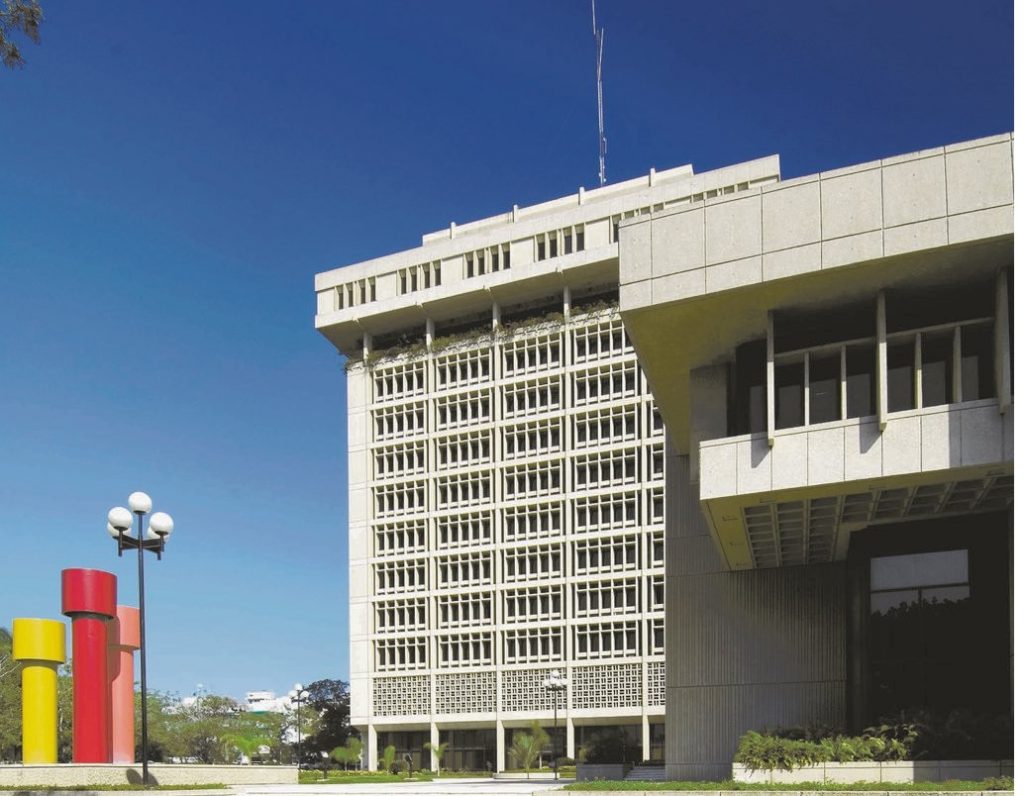
The Central Bank reports that preliminary full year GDP rose 12.3%, reflecting the difficulties during the 2020 pandemic year. Remittances, private investment and consumer spending led the growth.
Real Gross Domestic Product (GDP) achieved a remarkable year-on-year growth of 12.3 % in the January-December 2021 period. Particularly noteworthy was the government’s significant acceleration of capital expenditure in the last quarter of the year, which was decisive in achieving a result higher than the official projections for the end of last year. Specifically, the Monthly Indicator of Economic Activity (IMAE) for December 2021 registered an increase of 10.6% compared to the same month in 2020.
When comparing the performance of the Dominican Republic in 2021 with the latest Gross Domestic Product (GDP) projections published by the International Monetary Fund (IMF) for the Latin American region, this result places the country as the best performer in real terms to pre-pandemic levels. In this sense, GDP growth stood at 4.7% in 2021 compared to 2019, reflecting a real reactivation of the Dominican economy rather than a statistical rebound, contrary to the case of many Latin American economies, whose levels of economic activity will not exceed pre-pandemic levels.
The Central Bank highlights that the timely implementation of monetary and fiscal measures to mitigate the economic impact of the health crisis were crucial to the recovery of the economy. The leading financial entity highlights the broad monetary stimulus plan implemented since the beginning of the pandemic of some RD$215 billion, channeled through financial intermediaries to the productive sectors, especially to Micro, Small and Medium Enterprises (MSMEs) and households.
The monetary measures led to an increased private sector borrowing, up 11% as of 31 December 2021.
The Central Bank credits decisions taken to promptly reactivate the tourism sectors with a good part of the economic recovery. Government investment in vaccines is seen as one of the reasons for the recovery. 79% of the adult population has at least one dose and 66% has two doses.
The Central Bank explains that the process of consolidation of public finances with a considerable increase in revenue collection and rationalization of public spending in 2021 has resulted in the year’s end fiscal surplus, important for the sustainability of the public debt.
The sectors that contributed the most compared to 2020 were: hotels, bars and restaurants (39.5%); construction (23.4%); free zone manufacturing (20.3%); transportation and storage (12.9%); commerce (12.9%); local manufacturing (10.6%); other service activities (6.4%); and energy and water (6.0%).
Read more in Spanish:
Central Bank
2 February 2022