

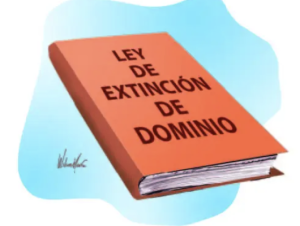
The Senate passed a first reading on the controversial Extinction of Ownership Bill. The Senate also categorized the bill as ordinary not organic. As an ordinary bill, only a simple majority of the senators present is needed for it to pass. An organic bill requires the yes vote of 2/3 of those present.
The approved law considers more than thirty crimes, among which are tax evasion, corruption, bribery, influence peddling, among others, to be subject to forfeiture proceedings.
If passed, the law would enable authorities to submit to forfeiture proceedings assets located abroad that are proven to come from illicit activities. It empowers foreign courts to extinguish assets in the country. A special court would be created for the hearings in the Dominican Republic.
The bill has been debated in Congress since 2011 when it arrived as one of the country’s commitments signed with the Financial Action Task Force (FATF), the global money laundering and terrorist financing watchdog. The bill has the strong support of the US Embassy in the Dominican Republic and that of President Luis Abinader.
The Congress that began in August 2020 with the change of government is studying a bill merged from those presented by senators Antonio Taveras Guzman (PRM-Santo Domingo) and Félix Bautista (FP-San Juan de la Maguana), Aris Yván Lorenzo (PLD-Elías Piña) and José del Castillo Saviñón (PLD-Barahona).
The purpose of the bill is to establish the legal framework for the regulation of the extinction of ownership of illicit goods, to define the consequences and faculties of the authorities responsible for its application, to recognize the rights and guarantees of the intervening parties, to establish the fundamental principles for the operation of the system of administration of the confiscated goods, and the procedure required for its judicial declaration in favor of the Dominican state.
The vote in favor was achieved with 24 of the 27 senators present with the opposition of the senators of the Dominican Liberation Party (PLD).
PLD spokesman, Yván Lorenzo, warned the Constitutional Court could reject the initiative. He argued the bill touches fundamental rights and therefore is an organic law.
Read more in Spanish:
El Dia
Diario Libre
Diario Libre
Diario Libre
13 July 2022