

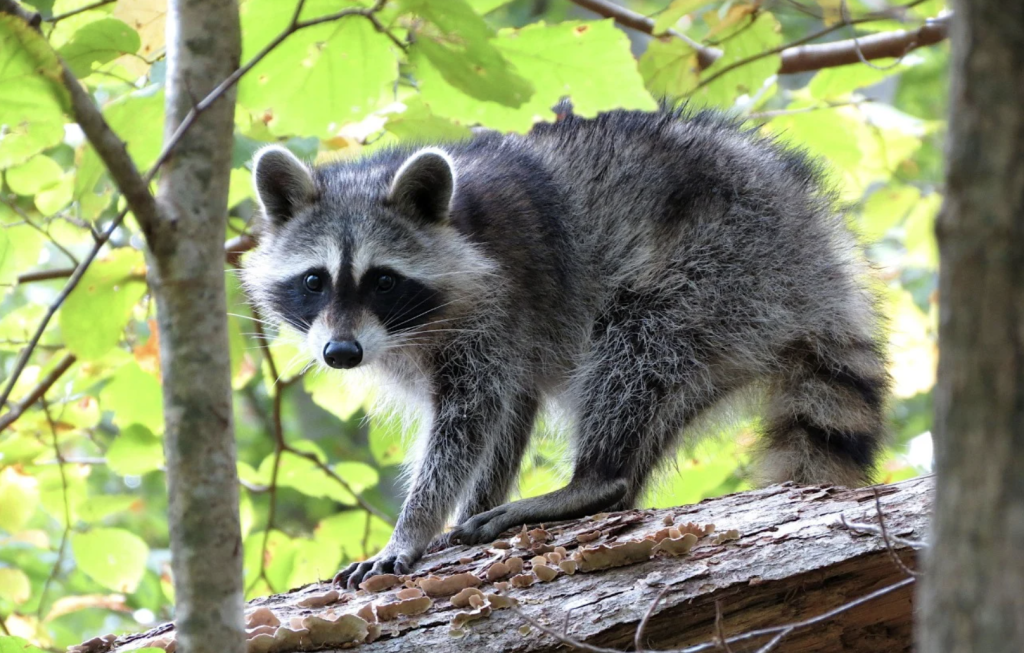
The National Zoo in Santo Domingo reports that the rogue raccoon now known as Apache (from the Spanish “mapache” for raccoon) is doing well and eating fruits, vegetables and eggs. Bananas, melons, papaya and watermelon are also food favorites, Listin Diario reports.
The female raccoon is currently in quarantine at the National Zoo with veterinarians still checking for internal and external injuries she may have experienced during her foray into several barrios of the National District where she was captured, held for ransom and eventually handed over to the authorities.
The presence of the stray raccoon is still a mystery. The animal is not a native to the island and, if propagated, experts say would represent a very serious danger to most of the local fauna, since it is omnivorous and can be quite vicious when looking for food, despite its “cute” appearance.
A long article in Acento on the matter reveals that raccoons are found on many of the islands in the Caribbean, where they have been quite harmful to the native flora and fauna. They tend to devour birds, reptiles and marine turtle eggs and hatchlings.
According to the International Convention of Endangered Species of Wild Flora and Fauna, the raccoon is very adaptable and prospers nearly everywhere. It is currently in the Bahamas, Guadaloupe, and the Dominican Republic. At the present time, in the DR, the raccoon population is located on the island of Catalina, but other sightings have been happening recently. On Catalina, the destruction of the biodiversity is evident, especially among the nests of marine turtles and local crabs. Control of the population only began in 2009 after a tourist was bitten by one of them.
What makes the Dominican case interesting is the fact that the animal was intentionally introduced into the country by the son of the dictator Rafael Trujillo, Ramfis, as something to hunt back in the 1940s.
Read more in Spanish:
Listin Diario
Acento
28 February 2023