


In Haiti, the many talks held to help the country resolve the economic and social crisis have met with deaf and mute people. Anthropologist Fernando FErrán, coordinator of the Haiti Studies Unit at the Padre Aleman Studies Center of the Pontificia Universidad Católica Madre y Maestra says that the patience of those trying to help has run out. He says this is one of the reasons Haiti has ceased to be the focus of priority attention of the international community.
A paper published by the center entitled “From Haitian limbo to apparent dialogues,” points out that the Caribbean country may be on the verge of implosion and chaos, but not of its disintegration and disappearance.
He believes the lack of international response is because outsiders are tired of always hearing the same reasons for the crisis. He writes that neither those inside the country transgress their differences nor those outside know what to do with a nation in a frank state of coma.
Ferrán cites that after the last failed international discussions initiated in 2004, that country has been categorized as a failed experiment. He writes it is as if Haiti has been bundled with other failed countries, such as Afghanistan, Yemen and Somalia.
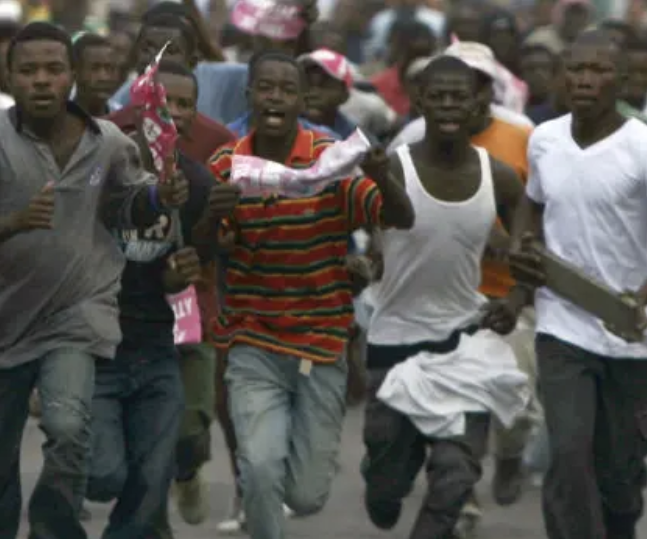
He points out that not even the reiterated call for an international military contingent, with the mission of reestablishing order, has met with acceptance, not even by the United Nations, highlighting Canada’s aid as an exception.
He indicates that the population and the various groups of the Haitian society face the dilemma of making common cause as a nation of diverse groupings and ethnicities or consecrating themselves in the inopia characteristic of the present agonizing Haitian state of affairs.
He understands that if they make a common cause, Haiti will overcome the present state of affairs thanks to its own effort. Otherwise, Haiti will be reduced to a nation marked by quarrelling and inoperativeness, to say the least.
He believes that the only glimmer of light left to get out of the tunnel in which Haiti finds itself comes from the treatment given to the agreement of last December 2022 in favor of an inclusive transition and transparent elections, signed by Minister Ariel Henry and representatives of various sectors, but which has also generated confrontations.
Read more in Spanish:
Hoy
2 March 2023