

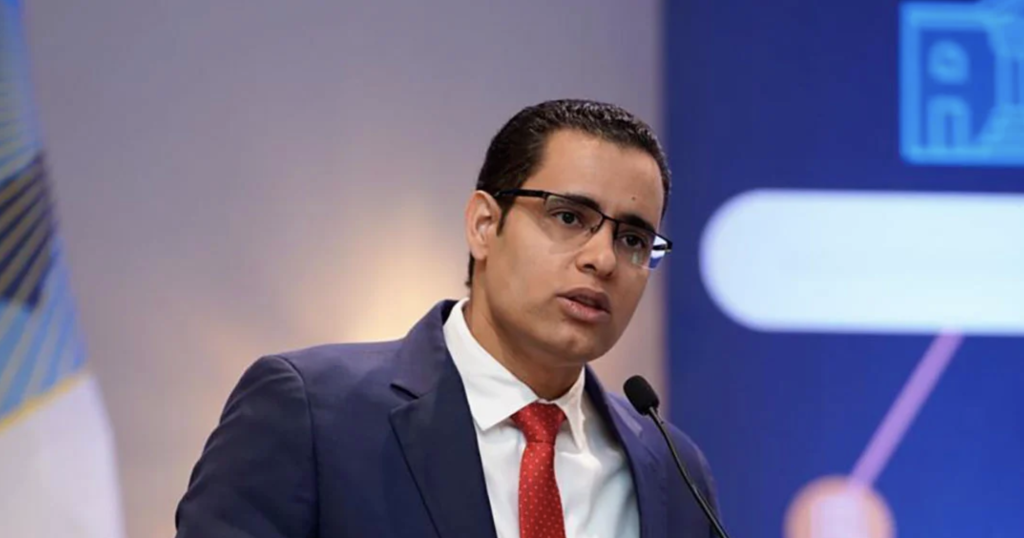
Former Dominican Republic Economy Minister Juan Ariel Jiménez has proposed a targeted crackdown on tax evasion as the primary solution to the country’s fiscal challenges, arguing that this approach is more effective than imposing additional burdens on the middle class.
The today Harvard University professor cited Costa Rica as an example, noting that if the Dominican Republic could achieve a similar level of tax collection efficiency on the General Sales Tax (ITBIS), it could boost government income by 1.7% of GDP—a figure that exceeds the revenue target of many proposed tax reforms.
“To achieve this, we need a combination of technology, improvements in tax administration, and a bit of creativity,” Jiménez stated.
He also suggested local authorities study the cases of Peru, Australia and Brazil.
He mentioned that Peru merged its tax and customs authorities in 2002 with much success. This consolidation resulted in a 1% increase in GDP and a decline in smuggling from 4.5% to 1.5% within five years. He argued that a similar merger of the Dominican Republic’s General Tax Agency (DGII) and Customs Agency (DGA) could streamline processes, enhance oversight, and boost revenue without raising taxes.
He said the government could leverage technology to detect tax evasion taking from the Australian experience. He explained that Australian authorities employ AI to analyze millions of transactions and identify suspicious patterns, leading to the discovery of over US$2.5 billion in tax fraud in a single year.
“A similar system in the Dominican Republic, where AI could cross-reference income, expenses, and asset data of individuals and businesses, would be ideal,” Jiménez said. “The government could partner with the OECD to implement technical cooperation mechanisms that would allow us to learn from these best practices.”
Jiménez cited the “Nota Fiscal Paulista” program in São Paulo, Brazil, as a successful example of a creative approach to reducing tax evasion. This program incentivizes consumers to request receipts by offering them the chance to win prizes or receive refunds on a portion of the value-added tax they paid.
“A Dominican version of this program, where every tax receipt includes a lottery number, giving consumers the chance to win daily prizes of up to one million pesos, would be a viable option,” he suggested.
The Presidency recently pulled a comprehensive tax bill after it met with widespread rejection by the general public.
Read more:
N Digital
23 October 2024