

For families in the Dominican Republic, getting their children to school can be a major challenge, especially when public schools can be kilometers away from home. Daily fares can be a financial burden and as a result for years, many children walked or pitched rides, but safety was always a major concern.
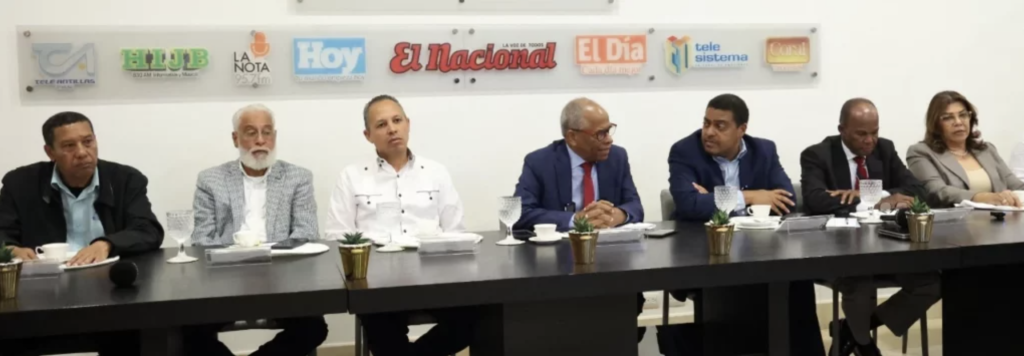
Now an Abinader administration initiative is making a significant difference. The National Student Transportation System (Trae) is providing a reliable solution for public school students. Trae director, Onéximo González, highlighted the program’s impact on families across 29 of 31 provinces and the National District, during an interview with the Corripio Media Group. Only Montecristi and Santiago Rodriguez have yet to be integrated in the initiative.
The program is not only easing the financial burden on families but also ensuring that children have safe and reliable access to education.
Gonzalez explained that since its launch in October 2022, Trae has provided over 21.6 million rides to and from school. With coverage reaching 90% of the 1,874,940 students initially targeted, the program has saved families an estimated six billion pesos.
González explained that President Luis Abinader launched Trae to ease the financial strain on families and ensure the safety of children. “There’s nothing more important than a child,” González emphasized, noting that the program also addresses safety concerns, as many children previously relied on unsafe transportation options.
Trae prioritizes the safety of its passengers. All buses have seat belts, and children are supervised by an assistant who helps them cross the street and provides first aid if needed. Drivers undergo regular drug and psychological testing.
The program also includes life insurance and health coverage for students, protecting them both on and off the bus. Additionally, a pilot program is underway with 30 buses equipped with lifts for children with disabilities.
Trae began by repurposing 50 abandoned buses from the Metropolitan Office of Bus Services (OMSA). Starting in Monte Plata and San Cristóbal, the program quickly expanded. Now, Trae operates 612 routes in 159 municipalities, utilizing 1,840 buses equipped with cameras, GPS, and safety features.
The fleet includes 850 new buses acquired by the Ministry of Education and 990 leased from private companies. These private buses serve the Greater Santo Domingo area, Hato Mayor, and San Cristóbal, costing the state around 8,500 pesos per day.
Trae operates on a strict schedule, with routes running from 6 to 8am, 12 to 2pm, and 4 to 6pm. González stressed the importance of families being punctual to ensure smooth operations.
With plans to add more buses to meet the growing demand, Trae is making a real difference in school attendance. The program has been particularly beneficial for single mothers, who can now maintain their work schedules or continue their education without worrying about their children’s transportation.
González also noted that Trae has helped reduce school dropout rates. “There are cases of mothers who couldn’t afford daily transportation, and the unsafe options forced their children to miss school,” he explained. “Now, that’s a thing of the past.”
To ensure the program’s effectiveness, Trae encourages parents, schools, and community members to act as watchdogs. Gabino Hernández, who oversees school mobility for Trae, emphasized the importance of this community oversight.
Trae began from day one ensuring high standards of safety. To achieve this, drivers, assistants and their supervisors receive special training that includes communication skills, conflict resolution, and traffic safety.
Read more in Spanish:
El Dia
30 January 2025