

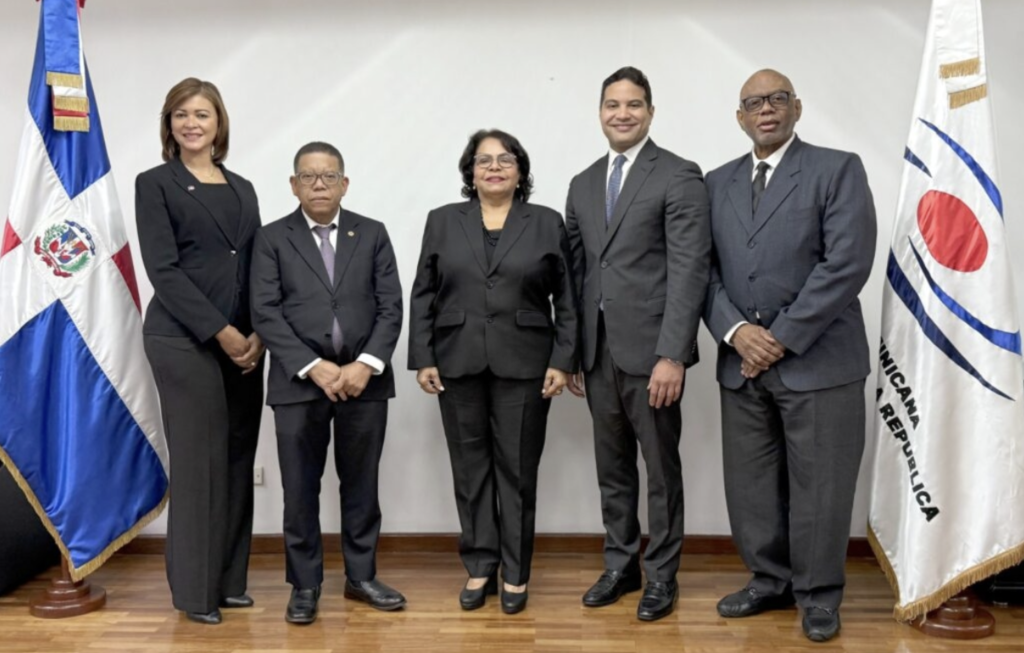
The Chamber of Accounts (Cámara de Cuentas) has announced a significant concentration of its future audits on the current administration, led by the ruling Modern Revolutionary Party (PRM). According to the institution’s 2026 plan, 85% of the scheduled audits will scrutinize the Abinader administration’s management since its first term began in 2020.
This is a notable focus shift. In the past the Chamber of Accounts had focused on historic actions of the previous governments.
Francisco Tamárez, vice president of the plenary, revealed the focus shift, emphasizing that the chamber has not slowed its oversight. He noted that of the 66 audits already published since the start of the new plenary’s work in April 2025, 41 have a direct or indirect impact on the PRM government.
“Eighty-five percent of the audits in the 2026 plan are from 2020 onward. That is to say, the great majority are from this government. That is the audit plan. But we have not stopped auditing,” Tamárez stated.
The announcement comes months after the Dominican Liberation Party (PLD) publicly accused the Chamber of Accounts of engaging in political persecution rather than fulfilling its mandate of fiscal control.
In October, PLD leaders charged the fiscal entity with “digging into the past” while allegedly ignoring the “disorder of the present.” The opposition party claimed the Chamber was leaking investigation details concerning officials from the previous administration, a move they argued violates institutional regulations.
During a meeting with media directors and editors, Chamber of Accounts president Emma Polanco Melo addressed the institution’s work. She reported that the current plenary inherited 235 pending audits, and since taking office in April 2025, has been publishing an average of three per week.
Polanco Melo highlighted the chamber’s internal strengthening, including:
• 119 resolutions issued across 25 ordinary sessions.
• The hiring of 82 new auditors via public competitive examinations.
• Progress on developing an Early Warning Portal.
• Updating the institutional structure under Law 18-24 and modifying the General Application Regulation.
Furthermore, she noted a surge in compliance with the Asset Disclosure System, with 1,335 sworn declarations presented since April. The chamber also redesigned the digital form, reducing the required fields by 60% to streamline the process.
Polanco Melo concluded by outlining an ambitious goal: to become the first Supreme Audit Institution (SAI) in the country certified in three international standards—quality, anti-bribery, and compliance—as part of its Integrated Management System design.
The challenge of inherited audits
The current plenary confirmed inheriting 235 pending audits from the previous management. That period was marred by scandal, including an accusation by a congressional commission that the entity executed only 54% of its assigned budget in 2021 and 68% in 2022, compounding concerns over the low completion rate of audits.
The Chamber of Accounts has announced it is currently conducting three concurrent audits of the National Health Insurance (Senasa), the state-run health insurance provider.
Officials from the Chamber’s plenary have stated that the work is progressing, but noted difficulties in obtaining necessary documentation from Senasa. The Chamber of Accounts plenary has also published results of a Senasa audit report covering a prior period has already been completed and publicly released.
The institution has confirmed it is undertaking a “comprehensive” review of Senasa’s operations and performance. This intensive scrutiny is attributed to two primary factors: the significant volume of public resources administered by the state insurer and the subsidized nature of a portion of its services.
Read more in Spanish:
El Nacional
Diario Libre
El Nuevo Diario
3 December 2025