

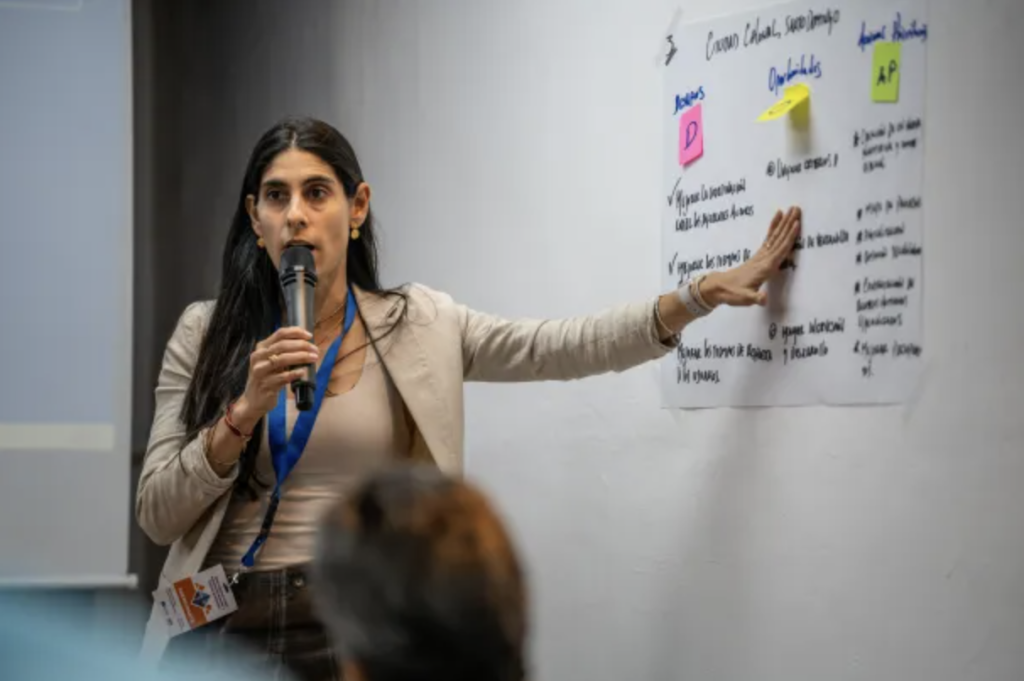
UNESCO World Heritage site managers from Latin America and the Caribbean gathered in Santo Domingo, Dominican Republic to promote Sustainable Tourism and share best practices. The regional workshop focused on strengthening capacities in visitor management and promoting inclusive and sustainable development.
UNESCO, in collaboration with the Ministry of Culture and the Municipality of the National District of Santo Domingo, organized the regional workshop on World Heritage and Sustainable Tourism, in the framework of the project ‘Communities for Heritage – Latin America and the Caribbean’ funded by the Ministry of Culture of the Kingdom of Saudi Arabia.
With the participation of the Central American Educational and Cultural Coordination (CECC/SICA) and Secretariat for Central American Tourism Integration (SITCA), the event brought together experts and management authorities from nine Latin American and Caribbean countries from 24-26 November 2025, to discuss common challenges and opportunities associated with managing tourism in World Heritage properties.
Tourism accounts for nearly 10% of the region’s GDP and sustains more than 35 million jobs in Latin America and the Caribbean, according to the World Travel and Tourism Council (WTTC). However, rapid growth poses risks to heritage conservation: 40% of World Heritage sites in the region report threats linked to tourism, a trend consistent with the rest of the world. The workshop promoted sustainable models that protect heritage values while strengthening community well-being.
Management authorities in Santo Domingo shared details on the tourism observatory that has been established to monitor visitation to its historic center, which experienced a 30% increase in international visitors in 2024 compared to 2023. The growth in tourism follows extensive renovation works and investment in the streets, pathways, facades and visitor signage in the historic center.
In line with the project objectives to create synergies between the safeguarding of tangible and intangible cultural heritage, the workshop engaged local intangible cultural heritage experts to discuss the role World Heritage sites can play in supporting the transmission and viability of living heritage in their sites. Participants highlighted the need to collaborate with local practitioners and community groups to ensure an inclusive approach to tourism management. Examples were shared from three cities: Santo Domingo, Dominican Republic, Trinidad, Cuba and Oaxaca, Mexico, where UNESCO workshops were held in recent months to link living heritage safeguarding with key urban priorities such as sustainable tourism, climate change adaptation, the protection of green spaces and ecosystems, and the revitalization of local crafts in historic centers.
The workshop included a panel dedicated to the Afro-descendant cultural heritage in Greater Santo Domingo, highlighting work undertaken as part of a project funded by the UNESCO Fund for Intangible Cultural Heritage. The project engages nine countries and is implemented in collaboration with CECC/SICA and the Regional Center for the Safeguarding of the Intangible Cultural Heritage of Latin America (CRESPIAL), with the involvement of the Central American Black Organization (ONECA)
Read more:
Unesco
11 December 2025