

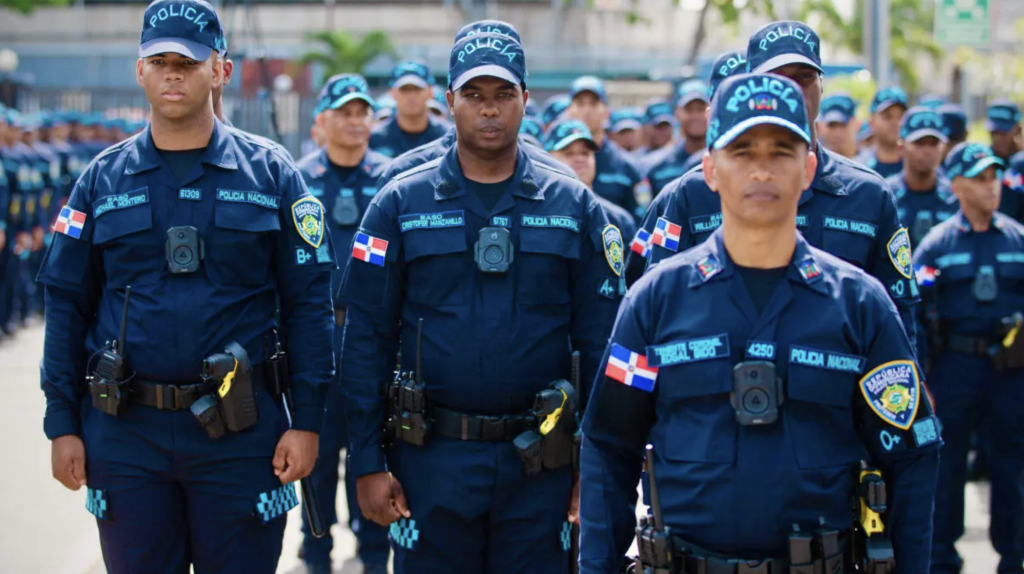
Interior and Police Minister Faride Raful reported this Wednesday, 17 December 2025 that the Dominican Republic’s new police patrol model is yielding significant results. Since its implementation mid-year, the pilot program, with its 1,150 new agents, has reportedly led to a measurable decrease in both criminal activity and social conflict within its targeted zones, as reported in Noticias SIN.
The model currently operates in specific sectors of Santiago de los Caballeros, the Distrito Nacional (the capital city), and Los Mina in Santo Domingo Este. It utilizes a strategic quadrant system designed to maximize visibility and community engagement, allowing for a more intimate connection between the authorities and the neighborhoods they protect.
Raful explained during an interview on El Despertador that more patrolling directly correlates to higher deterrence, noting that it is statistically proven that a greater police presence diminishes both criminal acts and social conflicts. This strategy focuses on reducing the opportunity for crime through constant visibility while allowing agents to intervene in community disputes before they escalate into violence.
Raful attributed part of the success to the more demanding preparation process of the new agents. The new training curriculum includes nine months of academic formation followed by three months of supervised field practice, all while maintaining mandatory psychological and toxicological evaluations. These officers are specifically educated in human rights, constitutional law, and the proportional use of force to ensure they operate with modern standards of conduct. To further ensure transparency and safety for both officers and civilians, agents are now equipped with body cameras that provide a digital record of all public interactions and serve as a vital mechanism for institutional control.
The pilot program is currently under a six-month evaluation period to measure its total impact and fine-tune operations before the government considers a nationwide expansion.
This initiative is part of a broader institutional transformation that has already seen the percentage of the force dedicated to patrolling rise from a mere 13% at the start of the reform to 28% today. The government aims to have 60% of the force actively patrolling by the year 2028.
Read more in Spanish:
Noticias SIN
18 December 2025