

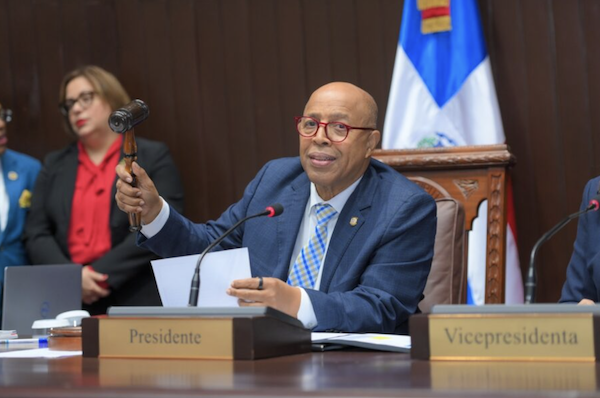
The Chamber of Deputies has approved the second reading of an organic law to create the National Intelligence Direction (DNI), a move that has sparked intense pushback from opposition parties who warn the bill threatens fundamental constitutional rights, as reported in Hoy.
The legislation, proposed by Senate president Ricardo de los Santos, passed despite a formal abstention from opposition lawmakers. The bill now returns to the Senate to reconcile modifications before heading to the Executive Branch for enactment.
The bill seeks to regulate the National Intelligence System, granting the new DNI specialized powers to prevent and counteract imminent acts of terrorism or threats to national security.
Key updates in the latest draft include:
• Anti-terrorism coordination: The DNI must act in coordination with the National Anti-Terrorism Directorate (Law No. 267-08) to protect lives and property.
• Weaponry authority: Article 33 was modified to allow the DNI to supply its personnel with firearms registered via the Armed Forces, issuing its own special carry permits based on service needs.
• Structural independence: Article 40 repeals the 1978 law that placed national investigations under the dependency of the Armed Forces, establishing the DNI as a more autonomous entity.
• Implementation: The agency will have 90 days following the law’s enactment to propose its operational regulations to the Executive Branch.
The approval, nevertheless, has met with sharp criticism from the People’s Force (FP) and the Dominican Liberation Party (PLD). Opposition leaders argue that while some improvements were made to the text, the bill remains dangerously vague.
Carlos De Pérez, deputy spokesperson for the FP, urged his colleagues to abstain, claiming the law significantly increases state discretion. “While the bill protects the confidentiality of journalists, it excludes lawyers, CPAs, and priests, leaving them vulnerable to state intrusion,” De Pérez noted.
Danilo Díaz (PLD) echoed these concerns, warning that the DNI’s broad powers could become an excuse to infringe upon private life, freedom of movement, and freedom of expression. Similarly, PLD spokesperson Gustavo Sánchez cautioned that national security “cannot be built by sacrificing the Constitution or granting extraordinary powers without clear checks and balances.”
Read more in Spanish:
Hoy
El Dia
8 January 2026