

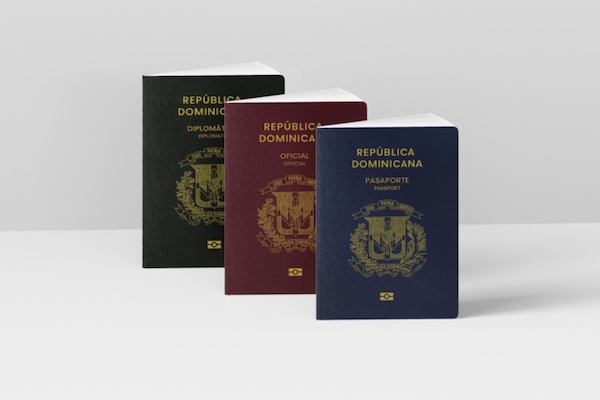
President Luis Abinader and First Lady Raquel Arbaje became the first citizens to receive the Dominican Republic’s new electronic passport on Wednesday, 14 January 2026, marking the official launch of a high-tech passport aimed at modernizing the nation’s migration security.
The President and his wife engaged in the biometric enrollment process at the new headquarters of the Passports Office (DGP) off John F. Kennedy Avenue. The procedure included the capture of high-resolution photography, digital fingerprints, and an encrypted signature.
The new biometric passport features a significant technological leap, moving to a 10-year validity period. Lorenzo Ramírez, director general of Passports, announced that the cost of the document will now be RD$6,700, an increase of RD$1,050 over the current version. The DGP has plans to offer as of February 2026 an optional courier service, allowing citizens to pay extra to receive their passports at their domicile rather than having to return to the office for pickup.
The passport is issued for a duration of 10 year for adults, and five years for minors.
The director emphasized that the upgrade places the Dominican Republic among countries with the most technologically advanced passports. The new document boasts more than 130 security measures, including an integrated electronic chip, multi-layer polycarbonate data page and three levels of state-of-the-art security, a standard currently held by fewer than 40 countries globally.
The security levels are expected to facilitate that Dominicans be able to travel to more countries around the world without having to go through the tedious visa solicitation procedures.
In a novel addition to the travel document, Ramírez announced that the new passport includes a repatriation service in the event of a citizen’s death abroad, providing coverage of up to US$9,000.
Implementation timeline
The government has designed a phased rollout to ensure an orderly transition:
15 January: Appointment booking opens for citizens with expired passports, those with less than six months of validity, or first-time applicants.
19 February: Phase two begins, involving biometric data capture for scheduled citizens and the gradual deployment of services to high-demand offices nationwide.
Diplomatic rollout: The initial phase also includes the deployment of systems to embassies and consulates, as well as specialized training for diplomatic and border control personnel.
Read more in Spanish:
Listin Diario
CDN
15 January 2026