

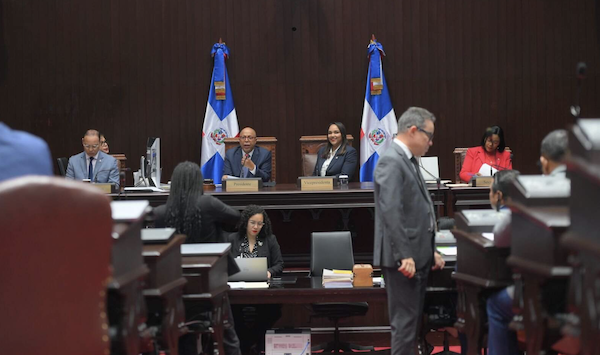
President Luis Abinader has sent a bill authorizing the payment of decades-old debts for public works projects back to the Chamber of Deputies, following its controversial “urgent” passage last week.
The legislation, which seeks to settle arrears for projects completed without formal contracts, was pushed through by the ruling Modern Revolutionary Party (PRM) majority without committee analysis. By returning the bill with specific observations, the President has forced a second look; the National Congress must now either accept or reject his amendments without further modifications.
The bill originated from a proposal by the Dominican Engineers, Architects, and Surveyors Guild (Codia). It identifies over 571 companies and beneficiaries awaiting payment for work dating back more than 30 years.
The debt is divided into two primary categories:
• Public works: 95 contractors who executed infrastructure projects.
• School maintenance: 476 contractors who performed corrective maintenance for the Ministry of Education (MINERD).
According to the text, MINERD holds the bulk of the outstanding obligations, involving 1,217 projects ranging from roof repairs and electrical work to the installation of sports courts across all provinces.
Form over substance
Despite the executive intervention, Codia president Enrique Rosario characterized Abinader’s observations as “merely formal” rather than structural.
“We have no doubt that the law will be ratified again and promulgated by the President,” Rosario stated. “We are convinced this will be resolved and the contractors will finally be paid.”
The bill lists several major government institutions as debtors, including the Ministry of Public Works, the Ministry of Housing and Buildings, and the National Hydraulic Resources Institute (Indrhi).
While the bill aims to provide closure for small contractors who have been in financial limbo for decades, the lack of initial legislative debate continues to draw scrutiny toward how these “uncontracted” debts were validated.
The veto system works that the President has the right to return the bill, but if the senators and deputies insist, the bill automatically can become law.
The president of the Dominican Engineers, Architects, and Surveyors Guild (Codia), Enrique Rosario, dismissed concerns today regarding President Luis Abinader’s decision to return a controversial debt-repayment bill to Congress, labeling the executive’s observations as “merely formal.”
The move by the Presidency forces the National Congress into a binary choice: legislators must now either approve or reject the specific amendments proposed by the Executive Branch, with no legal room to introduce further modifications to the text.
Despite this procedural hurdle, Rosario remains confident that the legislation, which authorizes payments for public works executed without formal contracts, will move forward. He noted that the President’s observations did not address the core substance of the proposal.
“We have no doubt that the law will be ratified once again and ultimately promulgated by the President,” Rosario stated. “We are convinced that this situation will be resolved and that the contractors will finally receive their payments.”
The bill is seen as a critical lifeline for hundreds of contractors who have been waiting decades for the State to settle arrears. However, the President’s decision to return the piece suggests a final layer of scrutiny is required before the Treasury releases the funds.
Read more:
Diario Libre
DR1 News
20 January 2026