

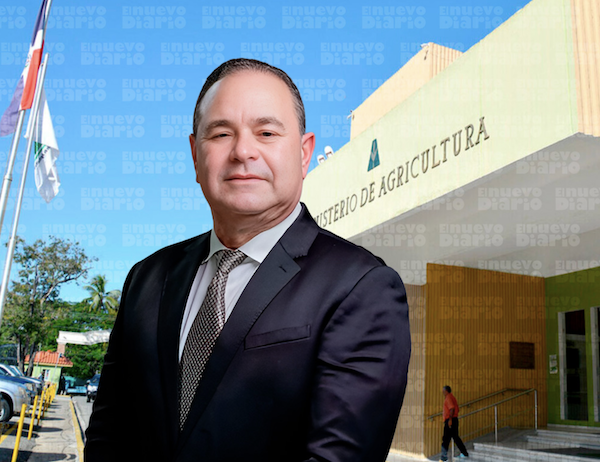
In early 2026, the Dominican Republic’s agricultural landscape saw a significant leadership shift with the appointment of Francisco Oliverio Espaillat Bencosme as the new Minister of Agriculture, succeeding Limber Cruz, who had been at the helm since August 2020. Cruz was criticized for allowing billions in farm produce imports.
The Minister Espaillat, a former “Agro-entrepreneur of the Year,” has centered his administration on a clear mandate: the comprehensive mechanization and modernization of the Dominican countryside to ensure food sovereignty and reduce reliance on imports. He has been on a road tour since his start to motivate farmers to reduce costs and increase sustainability betting on using equipment versus “low cost” labor.
By shifting away from manual labor toward a mechanized model, the government aims to enhance food sovereignty and increase the international competitiveness of Dominican products.
Under Minister Espaillat, the Ministry has pivoted toward a “technology-first” approach. He is known as a pioneer in rice mechanization, having successfully used advanced techniques to recover unproductive lands in record time. He has stated from day one that he will advance the National Mechanization Plan and is promoting a shift from traditional manual farm labor to machine-assisted farming. The plan calls for more precision agriculture and the implementation of satellite imagery, remote sensing, and geographic information systems (GIS) to monitor soil health and crop progress. The Abinader government is also offering finance facilities to small and medium-sized farmers to purchase tractors, harvesters and irrigation technology.
In early 2026, the newly appointed Minister of Agriculture, Francisco Oliverio Espaillat Bencosme, declared that the Dominican Republic’s plan to reduce its reliance on Haitian labor is “irreversible”. This strategy is fundamentally rooted in a nationwide push for agricultural mechanization, reflecting a “technology-first” mandate from President Luis Abinader.
The administration’s approach under Minister Espaillat focuses on several critical areas:
• Mandatory Mechanization: Minister Espaillat has explicitly stated that because manual labor is becoming increasingly difficult to source, the only viable path forward is to “support ourselves with machines”. He noted that this directive comes directly from President Abinader.
• National Equipment Fair: To facilitate this transition, the government is organizing a national fair for modern agricultural equipment. This event will showcase:
•Precision seeders and high-efficiency harvesters.
• Agricultural drones and advanced implementation tools.
• Financial fupport: The Agricultural Bank (Banco Agrícola) is providing specialized financing to help farmers transition, offering credit at comfortable interest rates with repayment terms of up to seven years.
• Operational efficiency: The Minister has ordered a comprehensive national audit of all existing Ministry equipment to ensure every machine is working “efficiently” at the service of local producers.
Read more in Spanish:
El Nuevo Diario
N Digital
Listin Diario
9 February 2026