

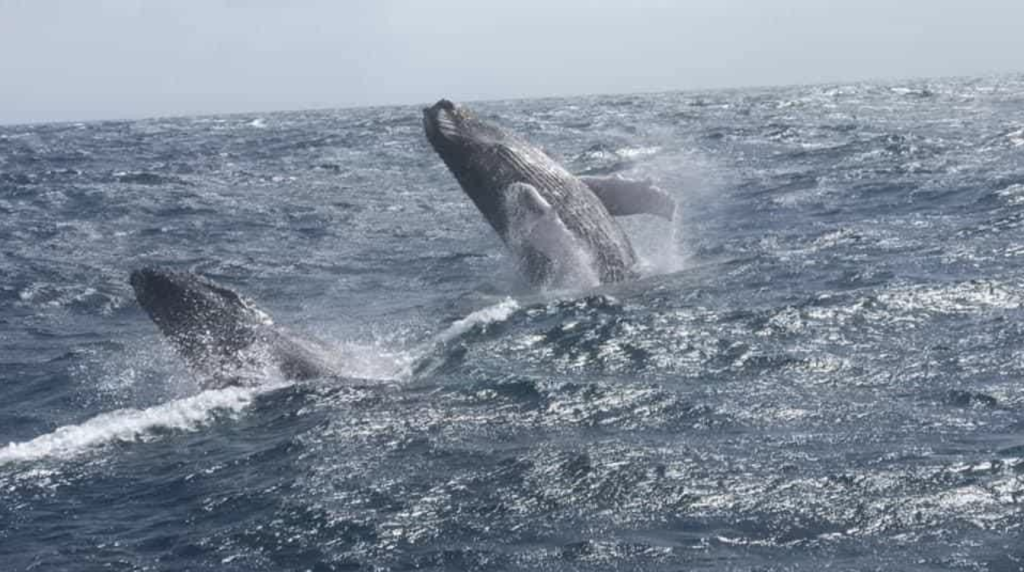
Humpback whales have adjusted their migratory patterns this season, arriving to the northern waters of the Dominican Republic earlier than usual. Samana City becomes the whale-watching capital of the Dominican Republic from mid January through March every year.
According to a report by El Día, the extreme cold and winter storms currently affecting the United States and the North Atlantic, linked to climate change, have triggered an early migration for these marine mammals.
While the official whale-watching season in the Silver Bank and Navidad Bank Sanctuary typically runs from 15 January to 31 March, local fishermen, whale watcher organizers and authorities began spotting humpbacks as early as December. Lenny Moris Rosario, the sanctuary’s administrator, noted that the whales have been arriving in larger quantities than normal.
The whales travel from the North Atlantic, including waters near Iceland, Greenland, and the eastern United States, to reach their “place of origin” in the Caribbean. They visit these tropical waters specifically to mate and give birth.
Rosario explained that because humpbacks are warm-blooded mammals, their calves need the warm Caribbean environment to survive. Interestingly, the whales do not feed during their stay in the Dominican Republic; instead, they rely on stored energy while the mothers nurse their calves with high-fat milk, preparing the young for the long journey back to northern feeding grounds.
The early arrival has benefited the local tourism industry. Between 15 January and 30 January alone, the number of international visitors to the sanctuary increased from 12,000 to 19,000 compared to previous periods.
For those interested in the experience, excursions typically range from RD$2,500 to RD$4,000 per person. For visitors who prefer not to board a boat, the Punta Balandra observatory, on the road from Samana City to Las Galeras, offers a land-based alternative for those with patience to spot the whales’ acrobatic displays without the excitement of the boat trips.
Read more in Spanish:
El Dia
10 February 2026