

A recent ruling by the Superior Administrative Court (TSA) ordering the exclusion of private land from the Jaragua National Park registry has triggered a firestorm of criticism from environmental groups and legal experts. The decision, which favors the company Inversiones del Sur, S.R.L., has been labeled a “dangerous precedent” that could undermine the integrity of the National System of Protected Areas (SINAP).
The court’s decision stems from a legal dispute involving the Gadhala-María family, that argues that their property rights were being violated by administrative omissions. They claimed that although Law 266-04 reduced the park’s boundaries two decades ago, the official cadastral records were never updated to reflect these changes, preventing them from developing or selling their land.
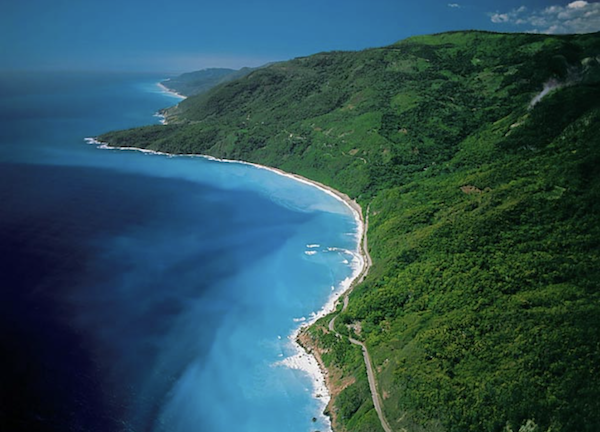
Jaragua National Park, a UNESCO Biosphere Reserve, is a critical ecological hub containing unique dry forests and coastal ecosystems such as Bahía de las Águilas.
Environmental advocates, led by the Coalition for the Defense of Protected Areas, warn that the ruling prioritizes administrative technicalities over constitutional environmental protections. “We are facing a systemic framework that seeks to distort documentary reality to validate the appropriation of conservation lands,” the Coalition stated in a press release. The group further emphasized that the Dominican Constitution requires a two-thirds majority in Congress to reduce any protected area, a threshold they argue was not met in the historical legislation cited by the court.
The TSA has countered these concerns by clarifying that the ruling does not grant new property rights but simply orders the Ministry of Environment to update its records in accordance with existing law. However, critics point out that the timing is particularly sensitive given the multi-million dollar tourism developments currently underway in the Pedernales province, where the land is located.
Former Environment Minister Francisco Domínguez Brito described the ruling as “reckless,” suggesting it could open the floodgates for similar claims in other national parks. The Ministry of Environment has already announced its intention to appeal the decision, setting the stage for a high-stakes legal battle in the Supreme Court of Justice. The legal battle could continue in the Constitutional Court.
As the legal proceedings move forward, the case has reignited a national debate over the balance between private property rights and the state’s duty to protect its natural heritage. Environmentalists maintain that allowing such “cartographic omissions” to dictate park boundaries poses a terminal threat to the country’s water production and biodiversity.
Read more in Spanish:
Noticias SIN
Listin Diario
12 February 2026