

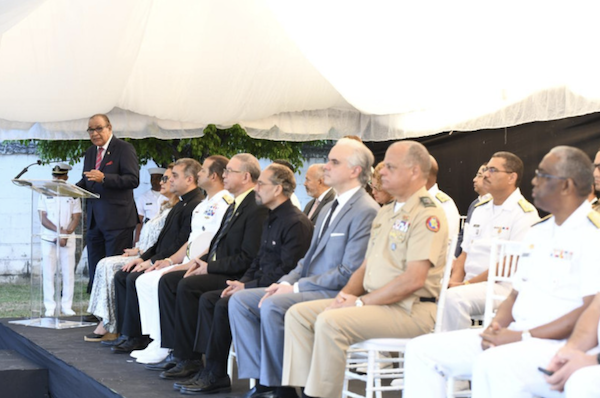
Miguel Franjul, president of the Observatory of Migratory Policies, has sounded an alarm over what he describes as a coordinated effort by international organizations to force the Dominican Republic into fundamentally altering its nationality laws. Miguel Franjul is also executive editor Listin Diario newspaper.
According to Franjul, there are clear “signs of conspiracy” aimed at compelling the nation to abandon its long-standing adherence to the principle of jus sanguinis (right of blood) in favor of policies that would mandate automatic citizenship for children of undocumented migrants.
The core of the dispute: Jus sanguinis vs. international pressure
Franjul asserts that the Dominican Republic is facing a “persistent and multifaceted” offensive from external actors. These entities, he claims, are seeking to undermine the nation’s sovereign right to define its own migratory and citizenship policies.
The primary points of contention include:
Defense of jus sanguinis: Franjul emphasizes that the Dominican Constitution is clear in its application of nationality based on lineage, rather than birthplace alone (jus soli), for those whose parents are in an irregular migratory status.
The threat to sovereignty: He characterizes these international demands as a direct violation of the nation’s independence, suggesting that foreign powers are attempting to “impose” solutions for the regional migratory crisis onto the Dominican Republic.
Call for national vigilance: As the head of the Migratory Observatory, Franjul called on the Dominican people and the government to remain firm against these “conspiratorial signs,” which he believes are designed to dilute national identity and state control over its borders.
The denunciation comes at a time of heightened tension regarding Haitian migration and the international community’s role in the Hispaniola crisis. Franjul argues that instead of providing the Dominican Republic with the tools to manage its borders, international organizations are focusing on legal maneuvers that would effectively grant mass regularizations.” The signs are there,” Franjul stated, referring to the increasing frequency of reports and recommendations from global bodies that criticize Dominican repatriation efforts and nationality protocols.
Franjul issued the statements at the conclusion of the first preliminary report of the Observatory of Migratory Policies.
Read more:
Listin Diario
19 February 2026