

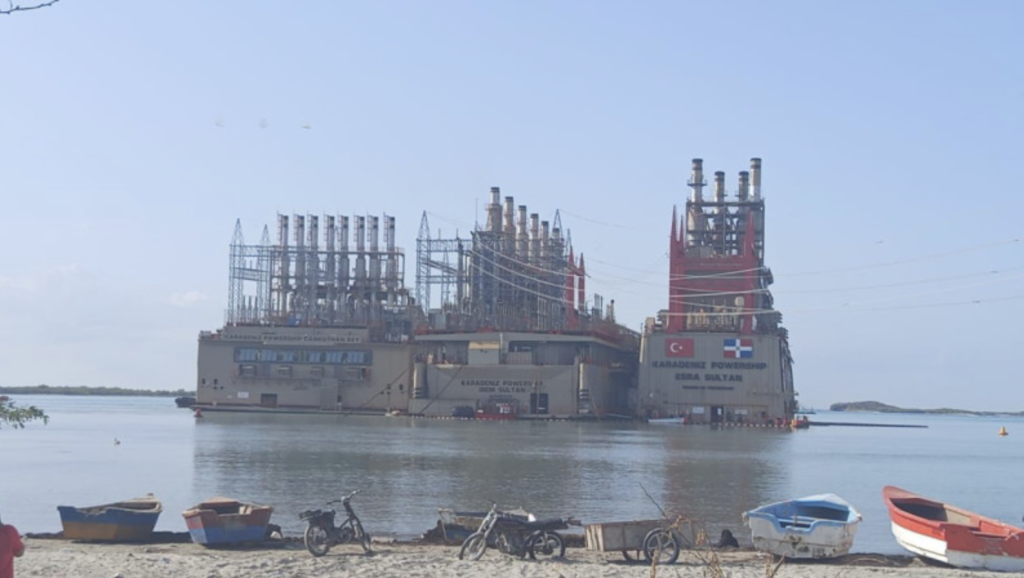
Medical experts and environmental advocates are sounding the alarm over a sharp increase in respiratory and gastrointestinal diseases in the southern region, attributing the health decline to heavy metal microparticles and toxic gases emitted by floating power barges and coal-fired energy infrastructure.
During a panel discussion held on 9 March 2026 at the Héctor J. Díaz Cultural Center, Dr. Senén Caba, former president of the Dominican Medical College (CMD), presented a grim outlook for the residents of Los Negros and surrounding areas.
According to Dr. Caba, the power generation barges anchored in Los Negros are releasing high concentrations of carbon dioxide and fine particulate matter. These pollutants are directly linked to a spike in chronic conditions among the local population, including:
• Chronic bronchitis and asthma: Irritants from fuel combustion are compromising lung function.
• Mental health decline: Constant noise and vibrations from the barge generators are causing sleep deprivation, particularly affecting infants and the elderly.
• Premature mortality: Citing World Health Organization (WHO) data, Caba noted that environmental risks—including air and soil pollution—contribute to nearly 14 million premature deaths annually worldwide.
Marine contamination
The crisis extends beyond the air. The panel identified a high incidence of gastrointestinal diseases caused by the discharge of fuel and untreated wastewater into the marine ecosystem.
“These discharges are contaminating the fish and crustaceans that serve as a primary food source for the inhabitants of this province,” Dr. Caba warned.
Expert testimony and community resistance
The event, organized by the Council of Organizations for the Development of Azua (CODESA) and the Anti-Barge Union of Los Negros, featured a multidisciplinary panel including:
• Luis Carvajal: Coordinator of the Environmental Commission at the Autonomous University of Santo Domingo (UASD).
• Ángela Guerrero: Botanist and protected areas specialist.
The experts collectively criticized the Ministry of Public Health and the central government, labeling their perceived inaction as “irresponsible.” Dr. Caba concluded the session by urging the community to “resist and persist” in their legal and social struggle against the presence of the barges to protect the region’s public health.
The Turkish company, Karpowership was authorized to park two barges outside the Azua province. These, located in Puerto Viejo, Azua (Playa de Los Negros), have a combined capacity of 178 MW to 180 MW, though reports indicate they have been part of an expansion, sometimes cited in conjunction with a larger total capacity of 408 MW, with contracts running through 2026. Likewise, Punta Catalina power generation complex has yet to resolve the use for its deposits of ash.
The Punta Catalina power plant in the Dominican Republic has a total installed capacity of approximately 720 MW. It consists of two coal-fired units, each with a capacity of 360 MW to 376 MW. It is the largest power generation facility in the Caribbean nation.
Read more :
El Nacional
10 March 2026