

Noise pollution has emerged as the most frequently reported environmental crime in the Dominican Republic, with the Specialized Attorney General’s Office for the Defense of the Environment and Natural Resources (Proedemaren) receiving more than 5,000 cases per month nationwide. Noise pollution is a cultural problem. Dominicans like music loud. High music levels are currently viewed as a public health concern by the Ministry of Public Health.
The Ministry of Interior and Police under Minister Faride Raful has sought to tackle the issue, with many successes, but the cultural issues have yet to be resolved so that the population understands the damage caused by high noise levels.
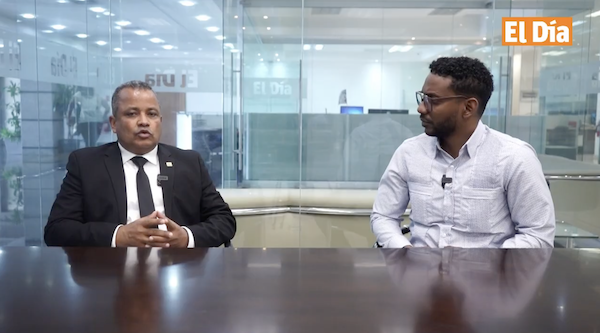
Assistant Attorney General Francisco Contreras told El Dia that noise complaints significantly outpace other infractions. Regulated under Law 90-19 on Acoustic Pollution, these violations carry penalties ranging from one to three years in prison and fines between 1 and 30 minimum wages.
Enforcement and Legal Benchmarks
The judicial system has seen a rise in convictions for noise-related offenses, with some perpetrators receiving one-to-two-year prison sentences. Data highlights from the department include:
• Seizures: In November 2025 alone, authorities destroyed 6,447 pieces of confiscated sound equipment following the conclusion of judicial proceedings.
• Legal Limits: Regulations set strict decibel limits for urban areas, typically capped between 50 and 55 decibels during the day and 55 to 60 decibels at night.
• Health Impact: Contreras emphasized that constant noise is not merely a nuisance but a public health crisis, linked to sleep disorders, anxiety, hearing loss, and nervous system alterations.
Secondary environmental threats
Following noise pollution, the most recurrent environmental crimes involve the illegal extraction of aggregates from rivers and coastal zones.
Under Law 64-00, all extraction activities require explicit permits from the Ministry of Environment, alongside land-use certifications. Proedemaren conducts technical inspections alongside specialists from the Autonomous University of Santo Domingo (UASD) and the Academy of Sciences to build robust legal cases against unauthorized mining.
Furthermore, forest fires, often sparked by traditional agricultural “slash-and-burn” practices, remain a critical concern for the Ministry. Contreras warned that these fires cause irreversible damage to biodiversity, though recent efforts have resulted in more stringent sentencing to act as a deterrent.
Reporting mechanisms
The Attorney General’s Office urges citizens to report environmental crimes, noting that the system allows for anonymous and secure filings. Reports can be channeled through:
• Proedemaren (Environmental Attorney’s Office)
• 911 National Emergency System
• Ministry of Interior and Police coordinated hotlines
• Ordinary Prosecutor’s Offices nationwide
“The complainant is protected by law; their identity is never revealed,” Contreras stated, underscoring that environmental protection is a collective responsibility.
In the Dominican Republic, the procedure for reporting noise pollution (contaminación sónica) involves several inter-institutional channels. While Proedemaren is the legal entity that prosecutes these crimes, the initial report is often handled by the National Police or the 9-1-1 system.
According to the latest protocols (as of 2026), here is the step-by-step procedure:
- Immediate reporting (Flagrancy)
If the noise is occurring at the moment (e.g., a loud party, a “colmado,” or a vehicle with high-decibel speakers), you should use the following channels:
• 9-1-1 Emergency System: This is the primary channel for immediate noise complaints. The operator will dispatch a unit from the Anti-Noise Department of the National Police.
• National Police App: You can file a “Denuncia Anónima” (anonymous complaint) via the official TuPoliciApp or the police website. You can attach photos or videos as evidence. - Formal complaint at Proedemaren
For recurring issues or cases where immediate police intervention did not solve the problem, you should file a formal complaint directly with the Specialized Prosecutor’s Office (Proedemaren).
Requirements for the Complaint:
To ensure the case is “detail-packed” and legally actionable, you should provide:
• Location: Exact address of the noise source (including the name of the establishment if applicable).
• Evidence: Videos or audio recordings showing the impact of the noise.
• Identification: While some reports can be anonymous, a formal legal follow-up usually requires the complainant’s ID (Cédula).
• Witnesses: Statements from other affected neighbors or your local Junta de Vecinos (Neighborhood Association) can significantly strengthen the case.
Contact Channels:
• Phone: 809-533-3522 (PGR Main Switchboard).
• In-Person: You can visit the Proedemaren offices located within the Procuraduría General de la República or at regional branches in major provinces (Santiago, La Vega, etc.).
• Línea Verde (Ministry of Environment): You can also report environmental crimes via WhatsApp at 849-356-6400 or by calling 809-567-4300 (Ext. 8000).
- Legal Framework
The prosecution of these cases is governed by:
• Law 64-00: General Law on Environment and Natural Resources.
• Law 90-19: Which modifies Law 287-04 on the Prevention, Suppression, and Limitation of Harmful and Annoying Noises.
• Anti-Noise Protocols: Proedemaren often carries out “allanamientos” (raids) to seize sound equipment (speakers, “kitipós,” etc.) from repeat offenders.
Note: Proedemaren has recently intensified its collaboration with Juntas de Vecinos to create “noise maps” and execute targeted operations in high-conflict areas of the Distrito Nacional and Greater Santo Domingo.
Read more in Spanish:
El Dia
18 March 2026