

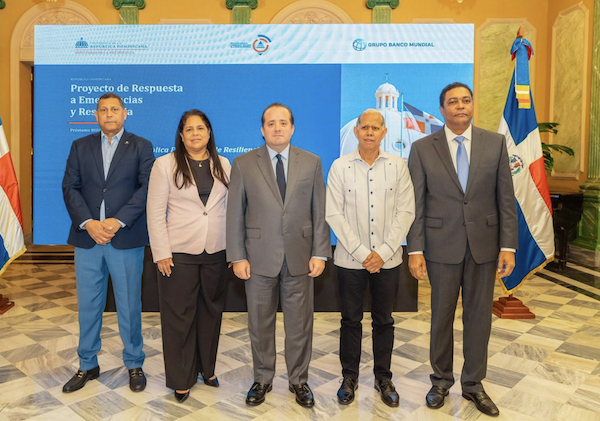
The Dominican Republic is accelerating its territorial organization efforts through a sweeping modernization of national geospatial data, centered on the expansion of the national geodesic network and the implementation of LiDAR (Light Detection and Ranging) technology. This high-resolution cartography is a cornerstone of a broader initiative to refine land-use planning, prevent the occupation of high-risk zones, and enhance the precision of both public and private sector decision-making.
The initiative was announced by the Ministry of the Presidency on 17 March 2026 as part of general advances on an overall Regional Plan for Territorial Planning and Development with World Bank backing. The works are aimed at overhaulng the Dominican Republic’s territorial planning and urban growth models to foster long-term resilience and sustainability.
The World Bank highlighted on its website that the government seeks to facilitate transparent dialogue with the market regarding the future contracting of consulting firms for the formulation of the Yuma Region’s Regional Land Use and Development Plan (PRODT), six Municipal Land Use Plans (PMOT), and four Territorial Strategies for Disaster Risk Reduction and Climate Change Adaptation (ET-RRD/ACC). The activity is geared towards promoting broad participation from national and international companies specializing in land use planning, disaster risk management, climate change adaptation, cartography, and geographic information systems.
Backed by a US$200 million investment from the World Bank, the Dominican Republic Agriculture Resilience and Emergency Response Project overall seeks to drive structural transformation through territorial ordering, comprehensive risk management, and the utilization of strategic data to optimize public investment. According to the Ministry, the program is designed to reduce national vulnerabilities while providing greater predictability for future development projects.
Minister of the Presidency José Ignacio Paliza emphasized during the launch that the initiative represents a fundamental shift in public administration by positioning territorial planning at the core of the national development model.
Paliza further announced that a formal Territorial Land Use Plan will be presented to the Government Council in the coming weeks to solidify the strategy’s implementation.
The comprehensive project integrates territorial planning, geospatial updates, risk management, and the development of resilient infrastructure to reduce the population’s exposure to climate-related vulnerabilities.
The Ministry of the Presidency highlights that key components of the initiative include:
• Resilient Infrastructure: The program targets the rehabilitation of 65 kilometers of critical roadways using advanced resiliency standards. This intervention is expected to directly benefit over 300,000 people, ensuring that vital transport links remain functional during extreme weather events and improving overall territorial connectivity.
• National Planning Coverage: Strategic planning instruments are being strengthened to guide urban and productive growth. These frameworks emphasize sustainability, safety, and competitiveness, with a projected reach covering more than 80% of the national population.
• Cross-Sector Risk Management: Disaster risk management is being woven into the fabric of public planning. By developing strategic data regarding threats and vulnerabilities, the state aims to protect key sectors including tourism, housing, agriculture, energy, water, and education.
• Geospatial Modernization: Beyond LiDAR mapping, the expansion of the national geodesic network will provide the foundational data necessary to curb informal settlements in hazardous areas and provide a scientifically rigorous basis for future development.
The government states that this multifaceted approach aims to strengthen the state’s capacity to make informed, data-driven decisions while fostering a more secure and competitive environment for the country’s long-term growth.
Read more:
Ministry of the Presidency
Ministry of the Presidency
World Bank
19 March 2026