

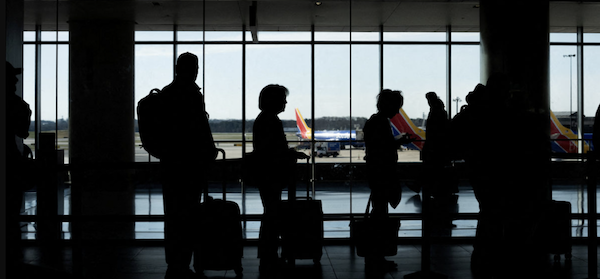
As of 31 March 2026, the US Transportation Security Administration (TSA) continues to face critical staffing shortages. For travelers heading to the Dominican Republic and those headed from the DR to the US and Puerto Rico, the personnel gap poses a significant risk to flight connections and overall travel time.
Reports are that the TSA situation in the United States is beginning to stabilize following a period of extreme disruption caused by a partial government shutdown that began on 14 February 2026. While a deal to fund the Department of Homeland Security (DHS) is moving through the US Congress, the “residual effects” are significantly impacting travel during the peak spring break season.
On 27 March 2026, an executive order was signed to fast-track pay for TSA officers who had been working without pay for weeks. While officers began receiving backpay on 30 March 2026, morale remains low. The agency lost approximately 500 officers who resigned during the impasse, and thousands more “called out” due to financial hardship.
ICE Deployment: In an unprecedented move last week, the administration deployed ICE agents to 14 major U.S. airports, including JFK, Newark, Atlanta, and Miami, to assist with line management and non-screening duties. These agents are expected to remain visible in terminals until staffing levels normalize.
Wait times of three to five hours have been reported at major hubs, especially Atlanta (ATL) and Houston (HOU). While bottlenecks are starting to ease with the return of unpaid staff, wait times remain unpredictable.
The situation is described as a perfect storm staffing problem. The TSA is currently managing a 12% vacancy rate in several “Category X” (high-volume) airports, including JFK (New York), MIA (Miami), and EWR (Newark), all main gateways to Santo Domingo and Punta Cana. A combination of a delayed federal hiring cycle and a seasonal surge in “shoulder-season” travel has left checkpoints understaffed.
The situation is having a direct impact on DR air connections. Since most flights to the DR from the Northeast and Florida depart early in the morning to maximize resort check-in times, the staffing shortage is hitting these specific “banks” of flights hardest.
Airlines are warning passengers that if they are not at the airport at least 3 to 3.5 hours before an international departure to the DR, they risk missing their flight.
When large groups are held up at TSA checkpoints, airlines often hold planes for 15–20 minutes, which creates a “ripple effect” of delayed arrivals at SDQ and PUJ, potentially affecting ground transportation and pre-arranged transfers in the DR.
Based on current TSA deployment data, the following hubs serving the DR are expected to have the longest lines:
• Miami International (MIA): Expect heavy delays. MIA is the #1 gateway to the DR and is currently seeing the highest attrition rates among TSA screeners.
• JFK / Newark (EWR): High volume from the Dominican diaspora in the Northeast will clash with reduced lane availability.
• Orlando (MCO): A growing hub for DR travel that is currently reporting “unpredictable” wait times due to a surge in family travel.
Mitigating the delay
Travelers are advised to utilize the following:
• TSA PreCheck / CLEAR: While these lanes are also seeing increased volume, they remain the most reliable way to bypass the standard “all-lanes-open” staffing issues.
• Digital identification: Airports like JFK and MIA have accelerated the rollout of “Credential Authentication Technology” (CAT-2) units, which allow for faster ID verification without a boarding pass, provided the traveler has a biometric ID.
• The “3-hour rule”: For all travel starting the week of 30 April, the 3-hour international arrival window is now being treated by carriers as a “hard minimum.” Four hours before departure is the recommended time to give for getting to the gates.
Moreover, passengers are expected to be inconvenienced by less flights and more costly flights. Due to a surge in jet fuel prices following the closure of the Strait of Hormuz on 28 February 2026, major carriers (including United and Delta) have begun consolidating flights. Travelers to the DR may find fewer daily frequencies and higher ticket prices as airlines prioritize high-load “spring break” routes over less profitable slots.
Read more:
PBS
White House
31 March 2026