

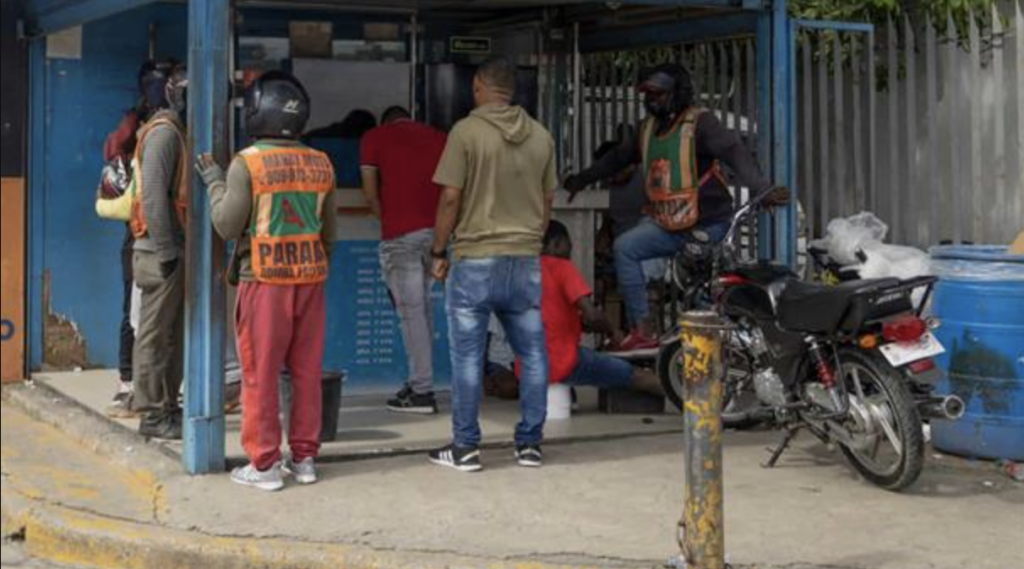
For years, gambling has been woven into the fabric of daily life in the Dominican Republic, a reality fostered by a permissive regulatory environment that has allowed betting shops to saturate the national geography. From lottery bancas on nearly every street corner and slot machines in low-income barrios to the unchecked rise of mobile betting apps, the state has effectively covertly supported an ecosystem where wagering is not just accessible, but inescapable, Diario Libre reports.
While this proliferation generates some tax revenue, it has birthed a devastating, less visible public health crisis: a surge in gambling addiction, Diario Libre warns.
According to health experts, the normalization of gambling has masked a pathology that is destroying mental health, household economies, and social stability. What appears to be harmless entertainment, a culturally sanctioned pastime, is increasingly becoming a trap for the vulnerable.
Eddy Paulino, director of the Psychology Department at the Fénix Foundation, that deals with addictions, warns that the line between a hobby and a disease is crossed when gambling ceases to be a distraction and becomes an emotional escape mechanism.
“When a person plays to cover up an emotion or guilt, and loses control of the game, it automatically ceases to be played for fun and becomes a pathology,” Paulino told Diario Libre.
The ubiquity of the industry allows the addiction to camouflage itself easily. It is evident in the elderly woman playing palé in the neighborhood, the pensioner investing his stipend in a quiniela hoping to multiply his income, or the monthly raffles that permeate social circles. However, the impact scales dramatically, reaching wealthy families who have lost property titles and accumulated millions in debt within the VIP rooms of casinos.
Despite the massive physical presence of the betting industry, often protected by political interests, the Dominican government lacks clear statistics on the public health fallout, Diario Libre explains.
Paulino estimates that at least 2% of the Dominican population is currently entangled in problematic gambling dynamics. The consequences are lethal: “80 to 85% of compulsive gamblers have suicidal thoughts, and nearly 20% have attempted suicide,” Paulino notes.
The symptoms often begin with constant lying, recurring debt, social isolation, and the abandonment of work and family responsibilities. Unlike alcohol or drug addiction, which often present physical signs, gambling addiction is a “hidden” disease until the financial or legal collapse occurs.
Clinically, the crisis is as severe as substance abuse. Paulino emphasizes that gambling compromises the same cerebral mechanisms responsible for pleasure and motivation as cocaine or alcohol.
“Addiction is addiction because it affects the same reward systems. It is a chronic brain disease,” the psychologist says. “The gambler seeks that dopamine spike, that immediate gratification.”
The crisis is evolving. With the advent of technology and online betting sites that operate with minimal oversight, diagnoses are skewing younger. Adolescents are increasingly being exposed to gambling via smartphones, bypassing the physical age checks of traditional casinos.
Paulino stresses that willpower alone is insufficient for recovery because “the brain is hijacked by the disease.” Treatment requires a multi-faceted approach involving psychological therapy, psychiatric support, and family involvement. Crucially, Paulino distinguishes between abstinence (stopping the act of betting) and true recovery (a complete lifestyle and emotional change). Without the latter, relapse is almost guaranteed.
“Speaking about the real consequences connects more than any moral discourse,” Paulino concludes. “We must break the taboo and treat this as what it is: a disease that can affect anyone.”
Read more in Spanish:
Diario Libre
29 December 2025