

For decades, the Dominican Republic has been the buffer zone for Haiti with the country benefiting from trade and low cost labor, but also absorbing an uneducated and undocumented population and thus picking up heavy social costs. For decades, Haiti has continued in the grasp of a small group of business people who live abroad but control the country’s borders and supplies.
There has been hope for US involvement to bring major changes that will reinstate Haiti on the road to development. But a recent column by Nelson Espinal Baez in Diario Libre warns the buffer zone role of the Dominican Republic in regards to Haiti may be instead strengthened by the Trump administration.
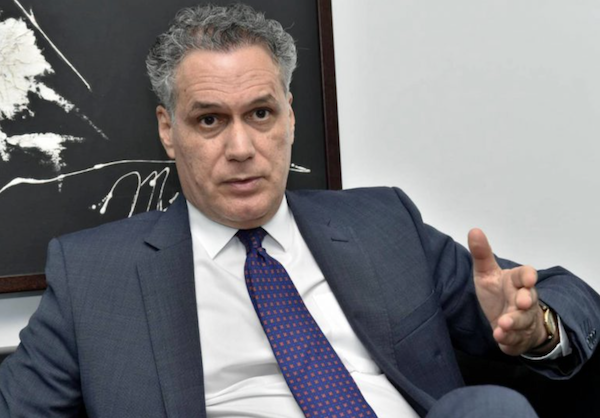
In his recent column for Diario Libre, Nelson Espinal Báez, a lawyer who is an Associate MIT-Harvard Public Disputes Program at Harvard Law School, presents a sobering geopolitical analysis of the Dominican Republic’s evolving role in the Caribbean. He argues that the country is at a crossroads, facing a strategic choice: becoming a partner in regional development or continuing to serve merely as a “buffer” (amortiguador) for the United States.
Espinal warns that the US regional strategy for the Caribbean, often framed under the banner of “economic security,” seeks an “anchor of stability.” While this sounds like a compliment to Dominican institutional strength, he highlights it could be a lurking “trap.”
While the current integration initiatives offer opportunities, Espinal cautions that through inertia or omission, the Dominican Republic could find itself playing the permanent role of buffer for the ongoing multidimensional crisis in Haiti.
In this scenario, the DR would continue to serve as a containment zone, absorbing the migratory and security shocks of the Haitian crisis to protect the broader region, and US territory, without necessarily reaping the benefits of a true, equal partnership.
He urges the Dominican Republic to pursue “the partner role” instead. He explains this would involve a bilateral relationship where the DR is an active participant in high-level economic and security decisions, rather than a passive recipient of mandates designed in Washington.
The remarks come at a time when Haiti is also being seen as a geopolitical tool. The focus on Haiti is not just humanitarian but strategic. The US seeks to contain “anti-democratic interests” (alluding to the influence of actors like China or Russia in the region) by using the Dominican Republic as a stable barrier.
Does the Dominican Republic truly understand the implications of the US term “economic security” that while it offers opportunities for investment, it often prioritizes US supply chain stability over local sovereign development.
Espinal recommends reading the Adrienne Arsht Latin America Center, Partnering for Economic Security: A Comprehensive Strategy for Greater US–Dominican Republic Integration to understand the vision of security that the Trump administration is unfolding in the Caribbean. He describes the document not just as a policy proposal but a “doctrinal translation” that serves as a way to ground a security vision already established in Washington into a specific regional context.
The document helps understand how the Caribbean, and the Dominican Republic in particular, is moving away from being a global “periphery”. Instead, it is becoming a “functional space” for US interests. This shift is not based on cultural or ideological ties, but on pragmatic strategic factors.
On one hand, the US seeks strategic integration in areas like nearshoring, logistics, energy, and digital infrastructure. At the same time, the US government is pushing for shared regulatory standards to ensure the Dominican Republic acts as a reliable partner in the immediate US vicinity.
Read more:
Diario Libre
Atlantic Council
11 February 2026