

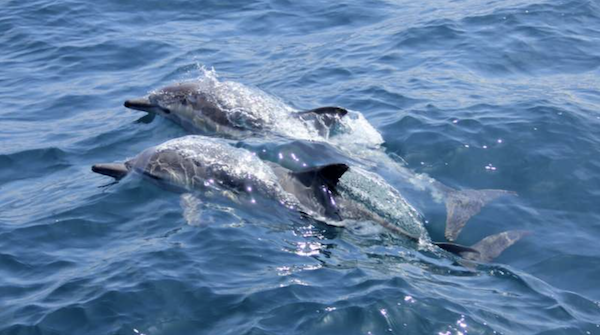
Dolphins swimming in Dominican waters may well be suffering the consequence of thousands of e-waste trashed into the oceans. Almost every Dominican older than 16 years old has a cell phone, tablet or laptop. Almost every household as a TV. The mishandling of e-waste in garbage dumps is barely being tackled.
New research published in Environmental Science & Technology has identified a disturbing global trend in South China Sea waters that likewise could be the same in the Caribbean. Liquid Crystal Monomers (LCMs), the chemical components that make screens on smartphones, TVs, and laptops function, are accumulating in the tissues of endangered dolphins and porpoises.
Scientists from the City University of Hong Kong analyzed Indo-Pacific humpback dolphins and finless porpoises from the South China Sea. They discovered that these persistent pollutants are not just present in the animals’ blubber and muscle but have successfully crossed the blood-brain barrier.
The study indicates these chemicals likely enter the marine food chain through electronic waste and household dust, eventually being consumed by top predators through their diet. While the shift from LCD to LED technology has led to a slight decline in recent years, laboratory tests on dolphin cells showed that these LCMs can alter gene activity related to DNA repair and cell division, signaling a significant long-term threat to ocean health.
Why this matters
This discovery is a critical “wake-up call.” It points to biological vulnerability, that is the ability of these chemicals to reach the brain suggests potential neurotoxic risks for species already fighting extinction.
Likewise, it points to the “invisible” lifecycle of tech. It highlights that the environmental cost of our devices extends far beyond their functional life. Even after a phone or TV is discarded, its chemical components remain mobile and persistent in the global ecosystem.
Moreover, there are major human health implications. As top predators, dolphins and porpoises serve as “sentinels” for the health of the ocean. Their contamination suggests that these pollutants are widespread in the marine food webs that humans also rely on.
The Hong Kong University scientists urge for stepping up and enforcement of regulations for disposal of e-waste. The research underscores a desperate need for stricter global e-waste management and corporate responsibility in the manufacturing of display technologies.
Read more:
Phys
26 February 2026