

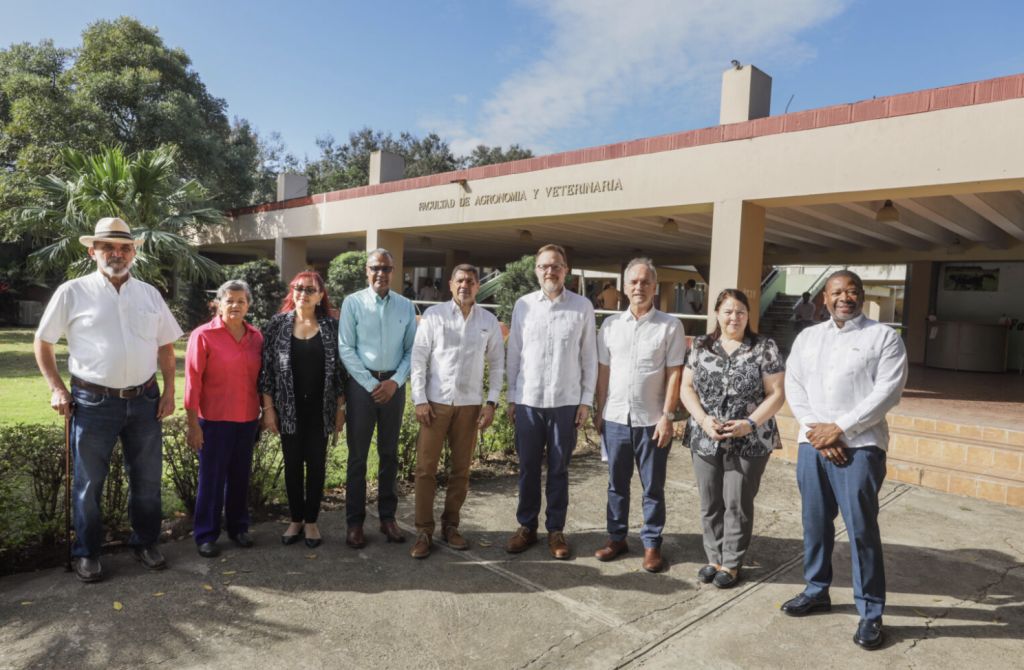
The US Embassy and the Ministry of Agriculture presented the new Resilient Agriculture Program to increase soil yields and improve fertilizer use practices, other climate-smart agriculture practices and increase the local production of organic fertilizers.
The Agency for International Development (USAID) will be implementing the program that seeks to address increases in food, crude oil and commodity prices, including fertilizers and other common agricultural inputs, due to supply chain disruptions resulting from the Russian invasion of Ukraine and the Covid-19 pandemic.
This program to be implemented by the National Cooperative Business Association, CLUSA International, will focus on improving soil yields and improving fertilizer use practices, other climate-smart agriculture practices and local production of organic fertilizers.
“The new Resilient Agriculture program was designed as a follow-up to our commitment to support food security through sustainable development and will be led locally in the Dominican Republic,” said Robert W. Thomas, acting ambassador. He noted that the program was specifically designed in response to President Abinader’s request to address the price instability and food insecurity resulting from the Russian invasion of Ukraine.
By moving away from dependence on imports of fertilizers and other agricultural inputs, the Dominican Republic will strengthen its self-reliance and resilience, create more employment opportunities, and produce high quality organic agricultural products.
Minister of Agriculture Limber Cruz said: “This type of initiative is important because it goes hand in hand with the Dominican government’s policy of protecting consumers and food producers, now that the world is facing biological and war threats that make the raw materials we produce in the countryside more expensive”.
During the event, a panel was held with producer organizations, private sector partners and representatives of the government project Plan San Juan, who discussed innovations in agricultural development in the south of the Dominican Republic.
Read more in Spanish:
US Embassy
9 February 2023