

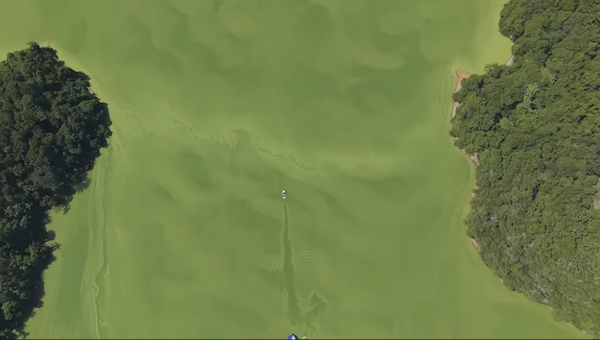
The Hatillo Dam (Presa de Hatillo) in the Dominican Republic is currently facing a severe environmental crisis characterized by an unusual green coloration and high levels of toxicity. Based on the reports and scientific investigations from February 2026, here is a summary of the situation regarding the dam, the pollution, and the role of mining.
Nairobi Viloria for Te Lo Explico looked into the “green water” phenomenon impacting the Hatillo Dam. What is known is that the dam’s water has turned a bright, oily green. Investigative reports by journalist Nairobi Viloria and various scientific institutes (UASD and private laboratories) have identified the primary cause as eutrophication, a process where excess nutrients trigger a massive “bloom” of algae and cyanobacteria. The study reveals a cyanobacteria called Microcystis is dominant. It creates an oily, green layer on the surface.
This bacteria produces microcystins, which are hepatotoxins (toxic to the liver). It poses an immediate threat to livestock (dogs, horses, or cattle) drinking the water and can cause skin irritation or respiratory issues in humans.
Mining and heavy metal contamination
While the green color is biological (algae), the underlying health of the ecosystem is severely compromised by heavy metals, which experts link largely to decades of mining activities in the Yuna River basin.
Toxic levels:
Investigations found concentrations of Nickel, Chromium, Cyanide, Cadmium, and Manganese that far exceed international safety standards for aquatic life. The study also revealed that nickel levels are found to be up to 174 times higher than the maximum permissible limit in some areas. Nickel is highly carcinogenic and can cause severe respiratory and skin issues.
Cyanide is reported at levels as high as 1.95 mg/L, which is extremely toxic to aquatic ecosystems.
Viloria traces the main problems to the mining link. She reports sources explain that the Yuna River basin receives runoff from several major mining operations, including Barrick Pueblo Viejo gold mine, Falcondo, and Cerro Maimón gold mine. Experts note that while the algae bloom itself is triggered by agricultural fertilizers (nitrogen/phosphorus) and waste, the heavy metals are a “chronic” legacy of the region’s mining and industrial history.
- Government and scientific response The Ministry of Environment initially attributed the situation mainly to low rainfall and agricultural runoff. However, newer independent studies by the Dominican Society of Chemical Engineers call for more transparency and a “comprehensive environmental audit” of the entire basin.
- Impact on Public Health and Economy
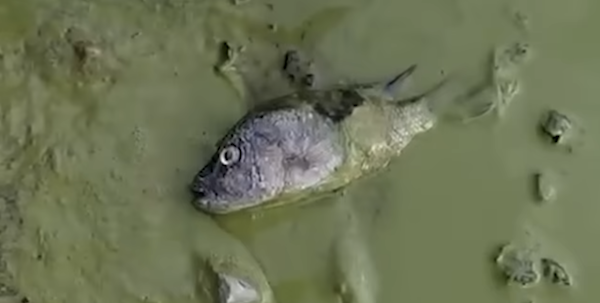
Food Chain: There is significant concern that these toxins are entering the food chain through fish (tilapia) and the irrigation of rice fields in the Lower Yuna (Bajo Yuna) region. Environmentalists advise against swimming in the green areas and suggest that if fish from the dam are consumed, the viscera and heads must be removed, as toxins accumulate there.
The report comes at a time when the Ministry of Environment under the present government authorized that Goldquest contract an environmental analysis to substantiate authorizing exploitation rights. Previous governments had not authorized the study, that is paid for by the mining interests, on grounds the exploitation would impact key water sources in farming and vulnerable environmental areas.
Likewise, the Abinader administration authorized that Barrick Gold build a second tailings reservoir in the Sanchez Ramirez province, where the Hatillo Dam is located.
Follow the story in Spanish:
Hoy
Nairobi Viloria Te Lo Explico / Presa de Hatillo Part 2
Nairobi Viloria Te Lo Explico / Presa de Hatillo Part 1
Diario Libre
24 February 2026