

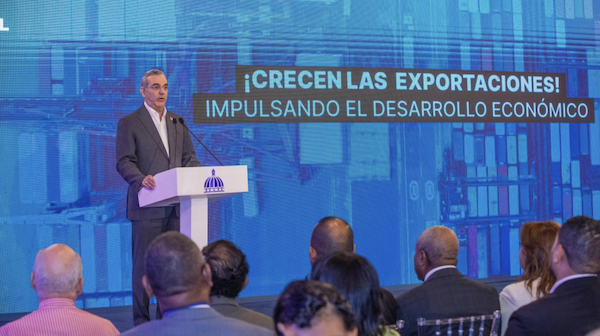
The Dominican economy demonstrated remarkable resilience in the first quarter of 2026. In March alone, the country surpassed the historic US$1.4 billion barrier in exports, recording US$1.45 billion in outward trade. The country exported 20.7% more compared to March 2025.
This time the primary driver of this growth is raw gold, which experienced a 78.2% surge in value, adding US$110.8 million to the monthly total. Gold reached a new record peak of US$5,626.75 on 29 January 2026. Since then, the price has fluctuated due to a “push and pull” between geopolitical tensions in the Middle East and shifting interest rate expectations. This is up from the peak of US$3,613.20 for the ounce of gold in 2025.
Other high-performing sectors included tobacco (up US$16.5 million) and medical instruments (up US$12.3 million). Canada has emerged as a major growth market, with exports to Canada increasing by 150%, largely driven by the demand for Dominican minerals.
Despite these internal successes, external pressures from the Middle East continue to strain the economic outlook. Economists from Intec university have warned that the crisis in the Strait of Hormuz, through which 25% of the world’s oil passes, poses a direct threat to Dominican price stability. A sustained US$10 increase in the price of crude oil could generate an inflation spike of 0.4% to 0.7% in the domestic market.
The Dominican government has maintained a “wait and see” approach to monetary policy, keeping interest rates steady in March 2026 due to the uncertainty caused by the “Iran-Israel conflict” and the lingering effects of Hurricane Melissa on food prices. The Central Bank expects 2026 GDP growth to remain in the 3.5% to 4.0% range, but this is contingent on the conflict being short-lived.
The Central Bank recently announced measures to enable banks to offer loans at reduced interest rates. The Interbank Rate moved from 11.54% in June 2025 to 7.84% in March 2026. The active lending rate is now averaging 13.28%, down from 14.99% in May 2025. Loans and savings entities have begun lending at 13.41%, down from 15.53%. The commercial lending rate has dropped from 14.84% in May 2025 to 12.10% in March 2026.
Economist Jaime Aristy Escuder has urged the government to reduce wasteful spending and non-productive spending.
Meanwhile, the National Business Council (Conep) suggests the Abinader administration act to mitigate the effects of the current global crisis created by the conflict between the United States and Iran. The five-to-six-week crisis has disrupted oil prices throughout the world, creating volatility that confuses any administration.
Conep president, Celso Juan Marranzini insisted on continued talks and cooperation between government and business to maintain national economic stability. During his comments to the reporters, Marranzini, together with Cesar Dargam, Conep vice president, stressed the importance of government investment as the key to development in the long haul.
Marranzini said that the private sector has to contribute through stable prices, supply chain reliability, jobs, and investments as a big part of the national economic activity.
Another spokesman for the private sector, Julio Virgilio Brache, the head of the Industrial Association of the Dominican Republic (AIRD), noted that the ongoing sessions between the government and the private sector is crucial during these moments of crisis on the international scene.
Read more in Spanish:
Presidency
Central Bank
El Caribe
INTEC
Listin Diario
20 April 2026